
Interested in becoming a medical assistant? If so, it is important to understand their duties and the skills they possess to be successful. Why? Medical assistants are the steady hands that keep clinics running smoothly. They support doctors, help patients, and handle the behind-the-scenes work that most people never see. It’s a role with purpose.
So, let’s talk about what medical assistants actually do each day and why their skills matter so much:
Welcoming Patients and Setting the Tone
The medical assistant is often the first person a patient meets. A simple “Hi, how are you doing today?” can lower their stress before they even sit down. As a medical assistant, you check their medical information, update their chart, and walk them into the exam room. You are setting the tone for the entire appointment.
Taking Vital Signs
During the medical assistant program at CyberTex, you learn how to take blood pressure, pulse, temperature, oxygen levels, and weight. As a medical assistant, you will check the patients’ vital signs at the beginning of every visit to set a baseline and understand if any vitals are out of range. Vital signs help the doctor better diagnose and treat the patient.
Helping the Doctor During Exams
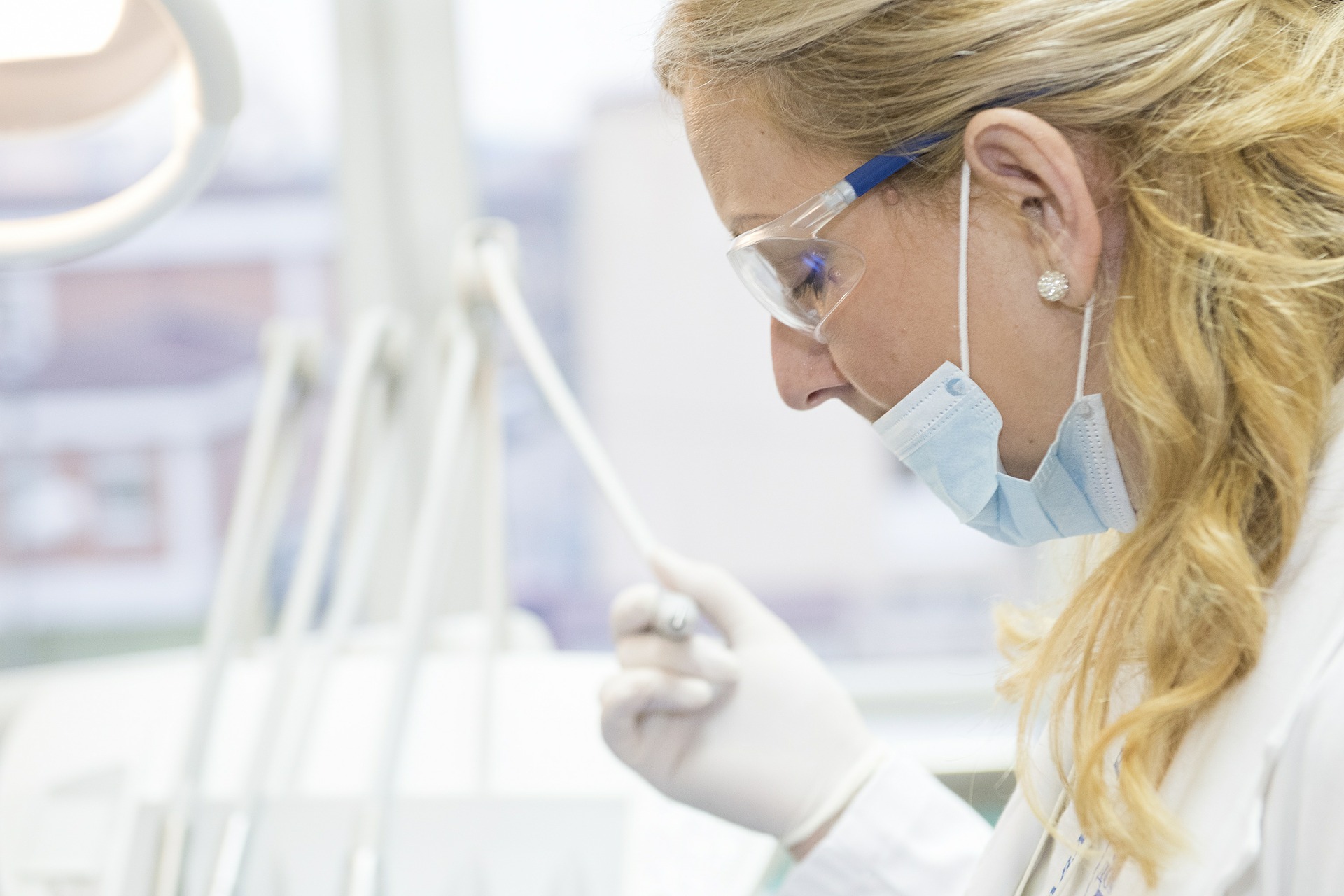
As a medical assistant, you keep the exam room organized, hand the doctor the right tools, and help the visit run without a hitch For example, during a throat exam, the doctor asks for a swab. You already have it ready. That smooth handoff keeps the visit short and comfortable for the patient.
Explaining Simple Instructions
Patients often leave with new steps to follow, and they count on you to explain them in a way that makes sense. For example, you may show a patient how to care for a small wound, explain how to prepare for a blood test, or walk a patient through tracking blood sugar at home
Helping people understand their care plan builds trust.
Collecting Samples
During the Medical Assistant program at CyberTex, you learn phlebotomy and practice it until you are ready to complete blood tests on human patients. Drawing blood or collecting urine samples is an important part of your medical assistant’s duties. It’s all about staying calm, confident, and accurate.
Updating Electronic Health Records
Charting is a big part of the medical assistant job. You enter notes, test results, and messages into the patient’s EHR system so everyone on the team has the same info.
Scheduling and Follow-Up
As a medical assistant, you help book appointments and make sure patients know when to return. Good scheduling keeps the clinic moving at a steady pace.
Keeping Exam Rooms Ready
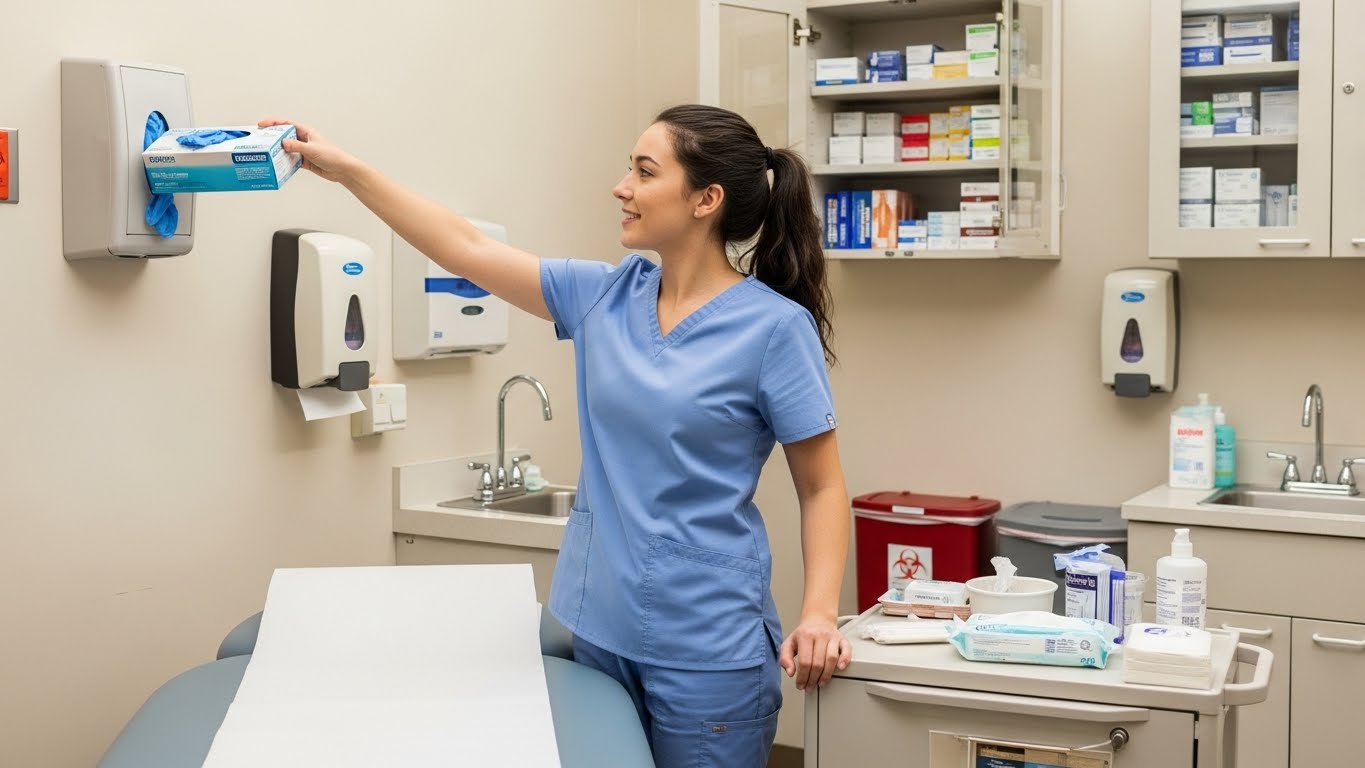
Between each visit, you clean and restock the exam rooms. For example, you replace table paper, restock gloves, and set out the next set of tools. When the doctor walks in, the room is ready to go.
Taking Calls and Patient Messages
You answer questions, route messages, and help patients understand what to do next. Many people rely on you long after they leave the clinic.
Skills Medical Assistants Use Every Day
Here are the skills that a medical assistant uses to be successful:
Skill #1: Communication
Medical assistants speak with patients, doctors, nurses, labs, and pharmacies all day. They need to explain instructions, share updates, answer questions, and pass along messages. Good communication keeps everyone on the same page. This matters because a clinic moves fast. When communication breaks down, patients get confused, doctors have incomplete information, and small issues grow into big problems. Clear communication builds trust and avoids delays.
For example, a doctor asks for a lab result during an exam. You understand what they need and pull up the chart right away. That quick response helps the doctor make the right choice on the spot.
Skill #2: Organization
Medical assistants keep rooms clean, charts updated, supplies stocked, and schedules running smoothly. They balance many tasks at once without losing track of what needs to happen next. This is important because a clinic that isn’t organized will fall behind fast. A missing chart, an empty supply drawer, or a forgotten follow-up note can slow down the entire day. Good organization protects patient safety and helps the medical team stay steady.
Skill #3: Attention to Detail
Medical assistants need to double-check labels, verify patient information, enter accurate notes, and make sure instructions are clear. Every detail matters, even the small ones. Because even a tiny mistake can cause major problems. Mixing up two charts, misreading a blood pressure number, or labeling a sample wrong could lead to a catastrophic medical error. Being precise keeps patients safe and helps doctors trust your work.
Skill #4: Empathy
Empathy means understanding how someone feels and responding with patience and care. Many patients show up scared, worried, tired, or in pain. Your tone, body language, and patience can ease that stress. Plus, patients remember how you make them feel. A calm, kind medical assistant can help someone relax before a test or talk openly about their symptoms. This helps the doctor get better information and improves the patient’s overall experience.
Skill #5: Teamwork
The medical assistant is part of a close team with nurses, doctors, front desk staff, and lab techs. Each person plays a role, and they rely on each other to keep the clinic moving. Healthcare depends on teamwork. When the team supports each other, patients get better care and the clinic stays organized. When teamwork breaks down, mistakes and delays happen.
Final Thoughts
Medical assistants are the heartbeat of a clinic. They keep things running smoothly, help patients feel safe, and support doctors so they can focus on care. If you want a job where you help people every day, becoming a medical assistant can be very rewarding.
Want to Learn More?
The Medical Assistant Training Program at CyberTex Institute of Technology prepares you for the CCMA from the National Healthcare Association. The curriculum is centered around the knowledge and skills you will need when you take the CCMA exam.
At CyberTex, we take excellent care of you by providing hands-on training, practical experience, and the support it takes to get started in a medical assistant career without spending years in school. You will learn clinical and clerical skills and prepare to work in physician’s offices, hospitals, and other medical facilities.
Contact us today to learn more about our Austin and Killeen campuses.