



If you’re looking into becoming an HVAC technician, you probably want a career that is in demand Something practical. Something you can learn in a focused amount of time and actually use.
HVAC stands for heating, ventilation, and air conditioning. HVAC technicians install and repair the systems that keep homes and businesses comfortable. In Texas, that work matters. When an AC unit goes down in August, people don’t wait. They call someone right away.
So how do you go from zero experience to working as an HVAC tech? Let’s walk through it step by step.
Step 1: Decide This Is the Right Type of Work for You
Before anything else, you should be honest with yourself about the kind of work HVAC involves. You won’t be sitting behind a desk all day. You’ll be moving. You’ll be carrying tools. You might be in an attic in the summer or outside checking a condenser unit. Some calls are quick fixes. Some take time and patience.
But if you like working with your hands, solving problems, and seeing the result right away, this field makes sense. There’s something satisfying about restoring cold air to a house that’s been overheating all afternoon.
You don’t need to know everything about heating and cooling yet. You just need to be open to learning technical skills and putting in the effort.
Step 2: Enroll in an HVAC Training Program
This is where most people make the real shift from “thinking about it” to actually starting.
You can try to learn HVAC on the job, but today most employers prefer applicants who already understand the basics. They want someone who knows what a capacitor does. Someone who understands the refrigeration cycle and has at least handled tools and gauges before. That’s why formal training helps.
CyberTex offers an HVAC Technician program for beginners in Killeen, Texas. You don’t need prior trade experience. The program starts with fundamentals and builds from there.
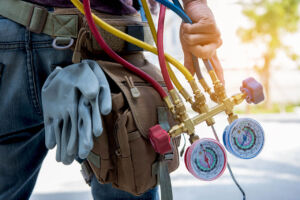
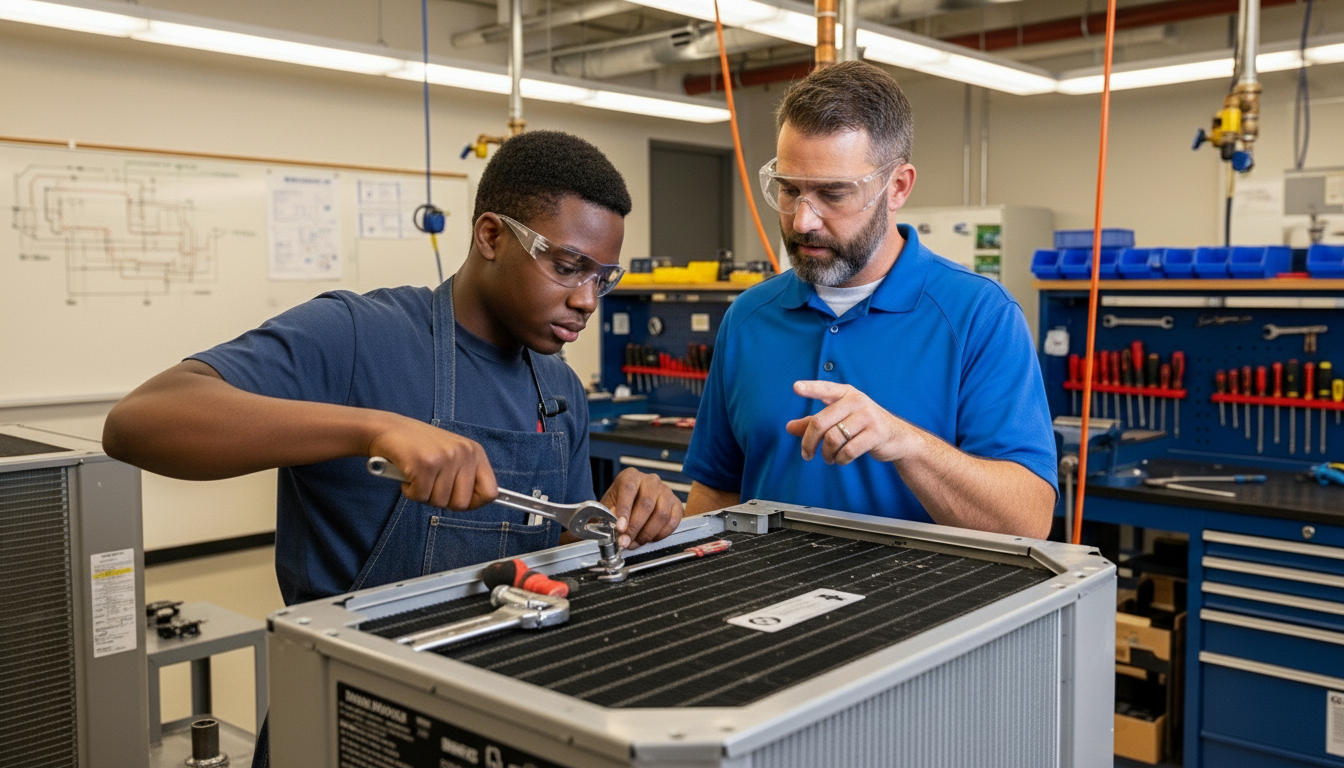
Students spend time working on real systems, not just reading about them. You learn how electrical components connect. You trace wiring and test motors. You see how refrigerant moves through a system. When something doesn’t work, you practice figuring out why.
That hands-on repetition is what builds confidence. By the time you finish, you’ve already worked on the types of equipment you’ll see in the field.
Step 3: Learn the Core Technical Skills
During HVAC training, you won’t be taking unrelated classes. The focus stays on the job itself.
You’ll learn electrical basics because HVAC systems rely on electrical components. Understanding voltage, circuits, and safety procedures is part of the foundation. You will also study the refrigeration cycle, so you know exactly how cooling works, not just that it works.
Heating systems are covered too. Gas furnaces, electric heating elements, airflow principles, and duct systems are all covered in depth. HVAC isn’t just about cold air. It’s about climate control year-round.
Step 4: Earn Your EPA Certification
If you plan to work with refrigerants, which most HVAC technicians do, you must pass the EPA Section 608 certification exam. This certification is required nationwide. And the good news is that you will prepare to take this exam during the HVAC technician program at CyberTex.
You’ll review refrigerant handling, safety procedures, and environmental guidelines so you’re ready for the test. Passing the EPA exam shows employers you’re legally allowed to work with refrigerants and that you understand safe handling practices.
Step 5: Apply for Entry-Level HVAC Positions
Once you complete your training and earn your certification, you’re ready to start applying for jobs. Plus, CyberTex offers career services after graduation. While a job is not guaranteed, we will help you build a strong resume, prepare for interviews and identify job opportunities that match your skillset.
Most graduates begin in entry-level roles such as installer or service technician trainee. In these roles, you will work alongside experienced technicians. You will assist with installations, help diagnose problems, and continue learning in real homes and commercial buildings.
In Killeen, HVAC work stays steady because of population growth and climate demands. Systems run hard in Texas. Maintenance and repairs are constant.
Step 6: Continue Growing in the Field
Becoming an HVAC technician doesn’t stop at your first job. As you gain experience, you can take on more complex service calls. You may specialize in residential systems or move into commercial work. Some HVAC technicians eventually become lead techs. Others decide to start their own service companies after gaining experience.
But none of that happens without the first step—training. That’s why starting with a focused program matters. CyberTex keeps the training centered on practical skills that translate directly to the job site. CyberTex makes it accessible for students who want to stay local while preparing for work that can be done almost anywhere.
The Straightforward Path
Going through the steps can be easy, and CyberTex is with you every step of the way. You decide this type of work fits you. You enroll in hands-on training at CyberTex. You build technical skills. You earn your EPA certification. Then you step into the workforce and keep learning from there.
It’s not complicated. It takes commitment and consistency, but the path itself is direct.
If you’re ready to build a skill that stays in demand in Texas, HVAC training is a practical move. And starting with CyberTex gives you a structured way to move from beginner to working HVAC technician without wasting time. And that’s how you become an HVAC technician.
HVAC Technician Diploma
Want to achieve HVAC certifications to start a rewarding career as an HVAC technician in Texas? With more than two decades of success in the medical, health, and IT sectors, we added an HVAC course to our curriculum. We proudly announce that we have flexible day and evening classes for the HVAC program.
CyberTex’s HVAC program can be completed in as little as 11 months by attending full-time with the flexibility of day and evening classes. You can take the EPA–608 certification from the US Environmental Protection Agency with our training.
Want to learn more? Contact us today.
