



Do you want to work in a network support role but not sure you have the experience to get started? Don’t worry. The Network Engineer program at CyberTex is for beginners.
Network support roles are about keeping computers and internet systems working so people can do their jobs to keep companies serving customers. For beginners, training starts simple and builds skills in a way that makes sense.
At CyberTex, the Network Engineer program is built for people who are brand new to IT. You will focus on skills you will actually use at work. The goal is simple: help you feel ready for real network support tasks.
What Network Support Jobs Look Like Day to Day
Network support workers help when technology does not work the way it should. A computer cannot connect to the internet, a printer drops off the network, or a new employee needs access to shared files. These are common problems that need quick, calm fixes.
You do not need years of tech experience to start. You just need clear training and a good understanding of how systems connect. That is what beginner training focuses on.
Learning How Networks Work
Most beginners worry they will be lost in class. That is why training starts with the basics. You learn what a network is and why businesses depend on it every day.
At CyberTex, instructors explain ideas in plain language. You learn how devices talk to each other, how data moves, and why small issues can affect many users. Once this clicks, the rest of networking becomes easier to understand.
Getting Comfortable with Network Equipment
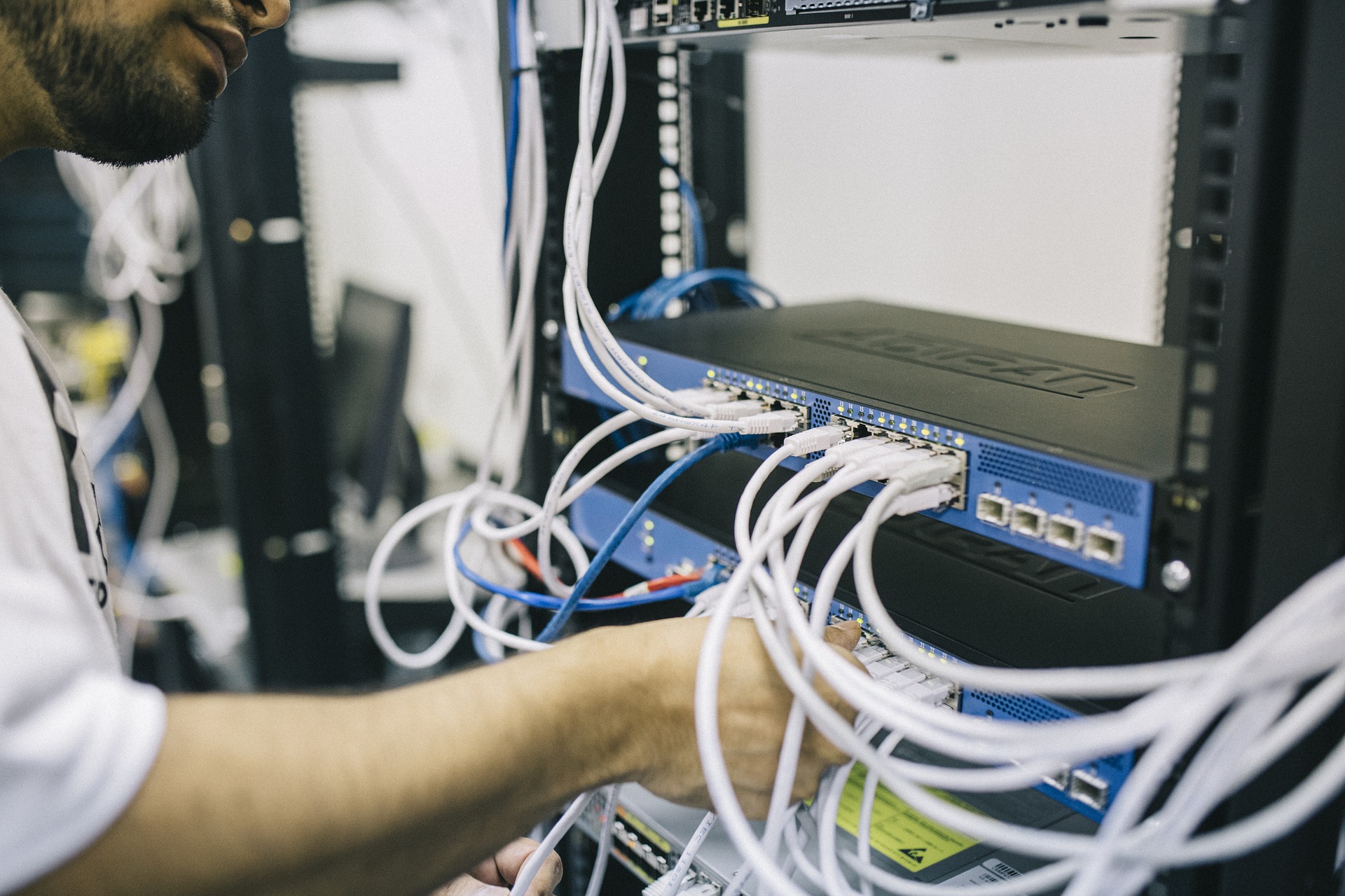
Early training focuses on hardware. Routers, switches, cables, and access points are tools you will see often in network support roles.
You will work with this equipment in labs. You plug in cables, connect devices, and watch how the network responds. This hands-on time helps build confidence fast. You are not just learning names, you are learning how things work.
Understanding IP Addresses
IP addresses sound complicated at first, but they are a core part of network support. Every device needs one to connect and communicate.
Training breaks this topic into simple steps. You learn how addresses are assigned, what happens when they are wrong, and how to fix common setup issues. Many real-world network problems come down to basic address mistakes, so learning this early matters.
Supporting Users Is Part of the Job
Network support is about helping people. Training includes working with user accounts and operating systems.
You practice tasks like creating user logins, resetting passwords, and setting access rules. These are some of the first responsibilities given to new network support workers. Knowing how to handle them well makes a strong first impression on the job.
Learning How to Fix Problems the Right Way
Troubleshooting is an important skill in network support roles. Instead of guessing, training teaches a clear process.
At CyberTex, you learn how to check connections, test equipment, and narrow down issues. You practice managing common problems like slow networks or dropped connections. This helps build your confidence so you are ready when issues come up at work.
Basic Network Security Matters Early
Basic network security training covers safe passwords, basic firewalls, and user access control. These lessons show how small mistakes can lead to big problems. By learning security basics early, you are better prepared to protect systems and follow workplace rules.
Hands-On Labs Make Learning Stick
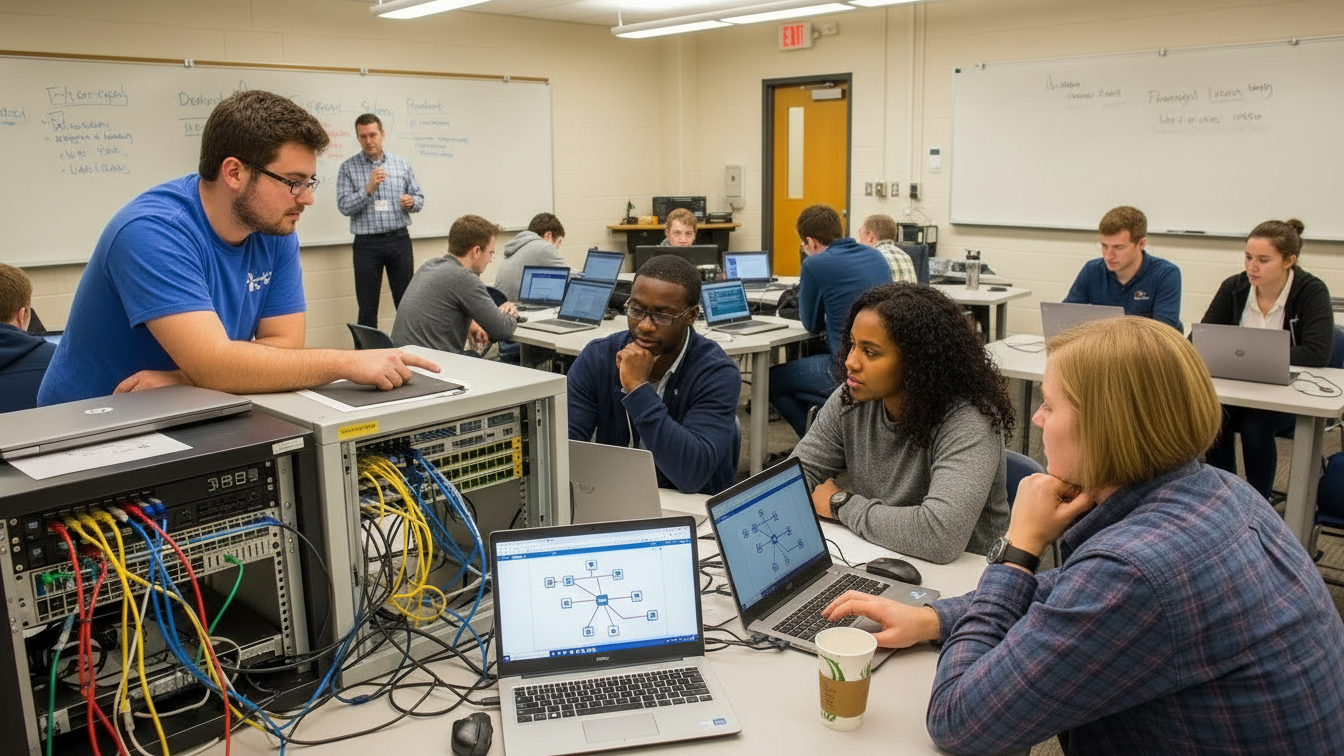
One of the biggest strengths of the Network Engineer program is lab time. You spend hours working with the same industry standard equipment you find on the job. This type of learning helps skills stick. You remember what you do, not just what you hear. By the end of training, many tasks feel like second nature.
Building Confidence for Entry-Level Network Support Roles
Network support roles are often the first step into IT. Training focuses on the skills employers expect from new technicians. By learning hardware, setup, troubleshooting, and user support first, you build a strong base. This makes it easier to grow into more advanced roles later.
Final Thoughts
If you want a tech career without spending years in college, network support training is a practical choice. The Network Engineer program at CyberTex focuses on real skills and hands-on.
You will leave with hands-on experience and a clear understanding of the network support role. That confidence can make all the difference when starting a new career in IT.
Want to Learn More?
Ready to become a network engineer? IT careers have become essential not just in Austin but globally, and there is no better time to pick up than now. In 2021, Austin was ranked #1 in Best Tech City for IT jobs by CompTIA, and the demand is only growing.
Ready to start a rewarding and challenging career in IT as a network engineer? The Network Engineer Program at CyberTex prepares you for advanced computer networking & security jobs. You will learn the skills and abilities to set up, install, configure, repair, and manage modern computer networks and their security.
Contact us today to learn more about our Network Engineer program.