



Leaving the military can feel like a reset. You’ve built discipline and worked under pressure. You know how to follow systems and fix problems. Now you’re trying to turn that into a civilian career that makes sense. Network engineering is one of the clearest paths. It’s hands-on, structured, and it connects well with how veterans may already think and work. So, the real question is simple. Is this a good fit for you, and how do you get started?
What Is Network Engineer Training?
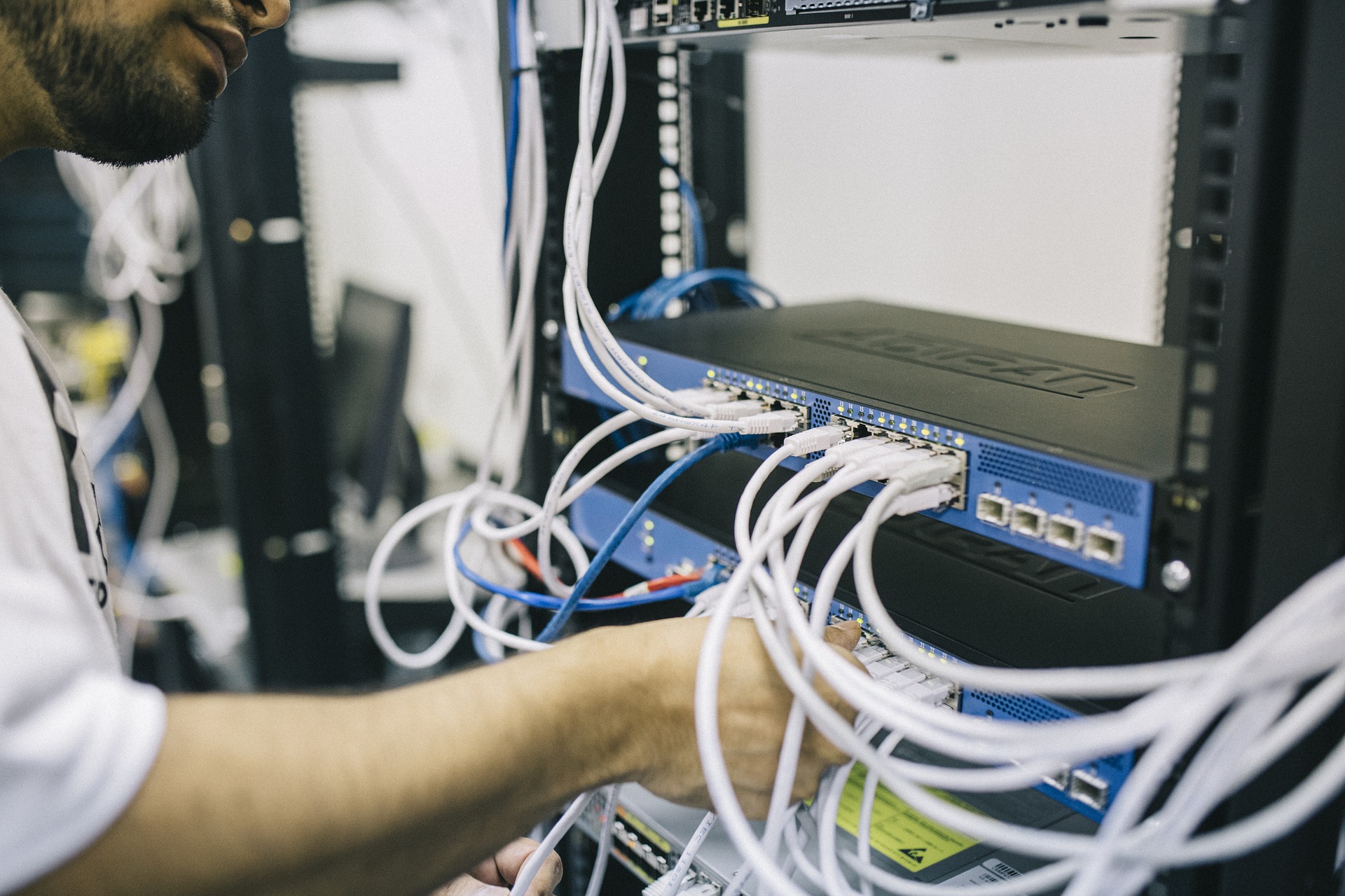
Network engineer training teaches you how to build and manage computer networks. That means setting up routers, connecting devices, fixing outages, and keeping systems secure. You learn how data moves from one place to another. More important, you learn how to fix it when it breaks.
Think about military communication systems. Radios, secure channels, systems that have to work every time. Network engineering follows that same idea. The tools are different, but the mindset is very similar. You’re working with systems that people depend on every day.
Why Veterans Often Do Well in This Field
A lot of people come into tech without structure. That’s usually where they struggle. You already have that part down. You’ve worked in situations where things had to get done right. You’ve followed procedures and solved problems when something failed. That carries over more than you might expect.
Picture a business losing internet access in the middle of the day. Work stops. Systems freeze. Someone has to step in and fix it fast. That pressure doesn’t throw you off. It feels familiar. That’s a big advantage.
How Network Engineer Training Works
Most network engineer programs are focused. You’re not spending time on classes that don’t connect to the job but learning how networks actually work. You start with the basics. How devices connect and how IP addresses work. Then you move into setting up networks, securing them, and fixing issues when they come up.
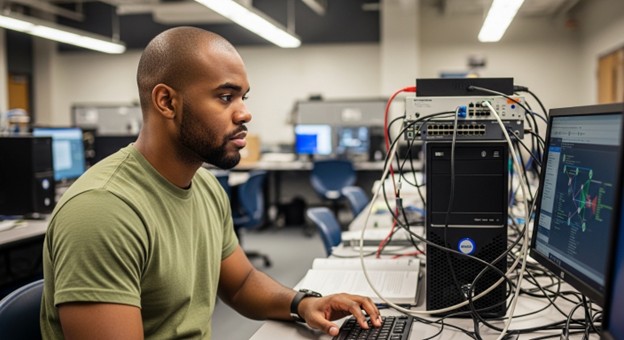
And it’s not just theory. You’re working with real equipment, plugging in cables, and setting up systems. Sometimes things break on purpose so you can learn how to fix them.
How Long Does It Take?
This path doesn’t take years. That’s one of the reasons veterans choose it. Most Network Engineer programs can be completed in less than one year. You move through training with a clear goal, finish the program, get ready for a job, and start working. If you’re coming out of the military, that speed matters. You don’t want to sit still for long. You want to move forward with something real.
What Kind of Jobs Can You Get After?
Once you finish training, you’re ready for entry-level tech roles. You’re not locked into one path either. You might start as a network support technician or IT support specialist. Some start at help desk roles. That’s normal. It gives you exposure to real systems and real problems.
From there, people move up. You learn on the job and take on more responsibility. Over time, you step into network engineer roles. That progression is common.
Do You Need Experience Before Starting?
No. That’s one of the biggest concerns people have. You might feel like you’re starting from scratch, but good training programs are built for beginners. We don’t assume you already know how this works. What matters more is consistency. Showing up, practicing, and asking questions when something doesn’t make sense. If you’ve been through military training, this won’t feel out of reach. It’s just a different subject.
How Your Military Background Transfers
Let’s make it simple. If you’ve worked in communications, logistics, or anything where systems had to connect and run smoothly, you already understand the core idea. Network engineering is about systems working together. When one part fails, you find it and fix it. Even the way you communicate matters. Clear updates. Following steps. Working with a team. Those skills show up every day in tech jobs.
Why CyberTex?
CyberTex keeps things simple. The focus is on getting you ready to work, not keeping you in school longer than needed. The Network Engineer program is hands-on. You’re working in labs, set up networks, and fix problems as they come up. It’s not just lectures. You’re doing the work.
There’s also a clear path. You know what you’re learning and why it matters, and each part builds on the last. That helps you stay on track instead of feeling lost halfway through.
And one thing people notice fast. The training feels practical. You’re not guessing what a job will be like. You’re doing the kind of work you’ll be expected to handle.
Common Concerns Veterans Have
A lot of people hesitate before starting something new. That’s normal. Some wonder if they’re too old. They’re not. Tech has people starting at all ages. What matters is your effort. Some worry they’re not good with computers. You don’t need to be. That’s what training is for. You build that skill over time. Others worry about picking the wrong path. Network engineering is a strong base. Even if you move into something like cybersecurity later, the skills still apply.
What the First Few Months Can Look Like
At the start, everything feels new. You’re learning how networks connect and figuring out the basics. A few weeks in, you start seeing how things work together. You connect systems and test them. You understand what’s happening. Then something breaks, and you fix it. That moment changes things. You go from unsure to confident. Not perfect, but capable. That’s the shift that matters.
What Happens After Training
You get your first role. It might be support or junior level. That’s where you build experience.
You start seeing real systems. Real issues. You learn fast because you’re doing the work every day. From there, you move up. Network or security roles. Other areas in tech. But it starts with that first step.
Ready to Take the First Step?
If you want a fast path into tech, this is one of the most direct options. You don’t need 4 years of school. You don’t need prior experience. You need a starting point and a plan. CyberTex gives you both. If you’re serious about moving into tech after the military, it’s worth taking a closer look. Because the hardest part is staying stuck. Once you start moving, things open up.
Want to Learn More?
IT careers have become essential not just in Austin & Killeen but globally, and there is no better time to pick up than now. In 2021, Austin was ranked #1 in Best Tech City for IT jobs by CompTIA, and the demand is only growing.
Ready to start a rewarding and challenging career in IT as a cybersecurity specialist? The Cybersecurity Specialist Program at CyberTex prepares you for advanced computer networking and security jobs. You will learn the skills and abilities to set up, install, configure, repair, and manage modern computer networks and their security.
Contact us today to learn more about our Cybersecurity specialist program.
Frequently Asked Questions (FAQs)
Do I need to fully understand tech before I enroll?
No. You don’t need a tech background to start. Training is built for beginners. You’ll learn step by step, starting with the basics. Think of it like any military training. You weren’t expected to know everything on day one. You learned by doing, and it’s the same here.
Can I still use my military experience, or am I starting over?
You’re not starting over. You’re building on what you already have. Skills like problem-solving, following systems, and working under pressure all carry over. Even if your role wasn’t technical, the way you think and work still applies.
What if I’ve been out of school for a long time?
That’s common. A lot of veterans feel that way at first. The difference here is the training is focused. You’re not taking general classes. You’re learning skills you’ll actually use on the job. And once you get into it, the routine comes back quicker than you expect.
How do I know if this is the right career before I commit?
A good way to think about it is this. Do you like solving problems? Do you like figuring out how things work? If yes, this could be a good fit. Training programs also give you early exposure to the work, so you’ll know pretty quickly if it clicks.
What if I struggle during training?
That’s part of the process. Everyone hits a point where something doesn’t make sense right away. The key is sticking with it and asking for help. Good programs have instructors who work with you when you get stuck. If you stay consistent, you’ll get through it.