




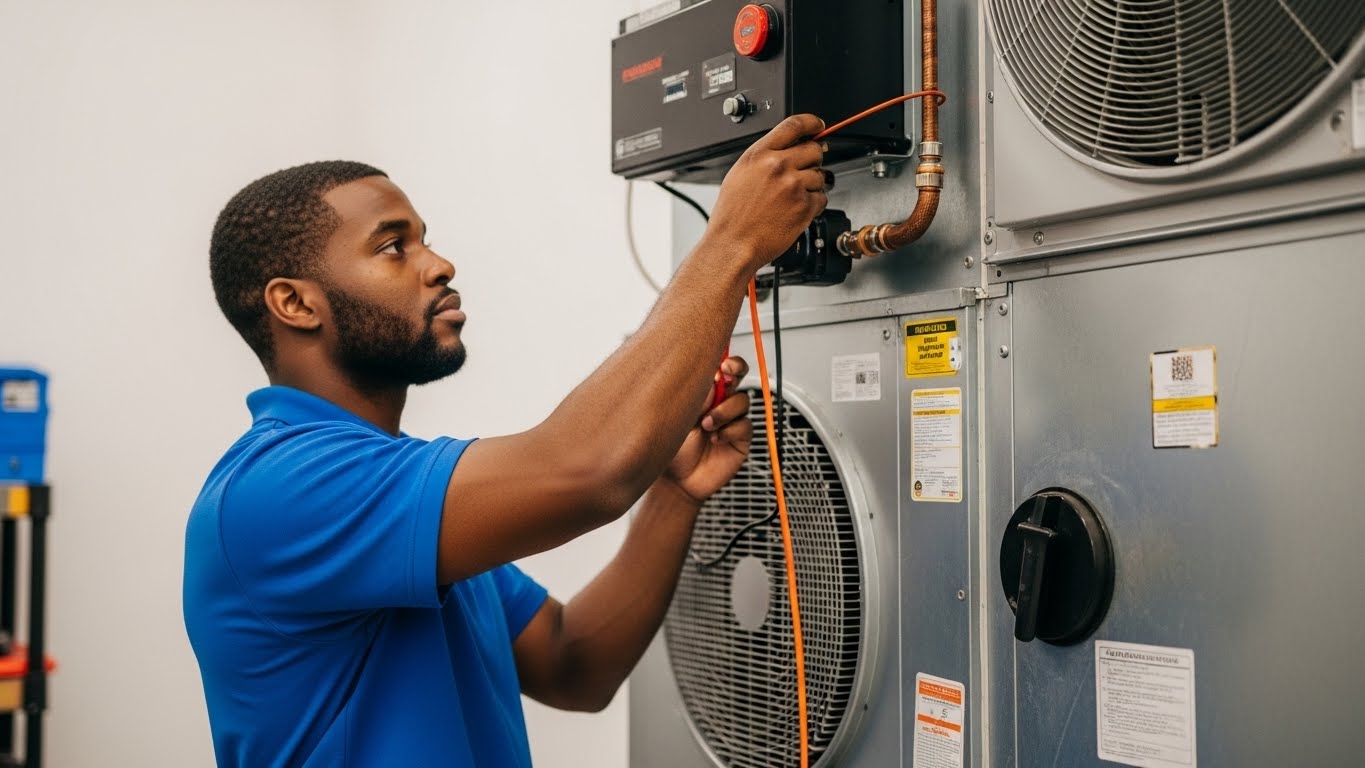
If you like working with your hands and want a job where your work matters, HVAC may be the right career choice for you. In Central Texas, air conditioning is part of daily life. When an HVAC system stops working, people feel it fast. In Texas, we experience significant weather fluctuations—one moment it’s winter, then summer by the afternoon, and we can have freezing temperatures one day followed by spring-like conditions the next. This unpredictable climate underscores the pressing need for more HVAC technicians to ensure our AC units are always ready to perform.
Many people choose HVAC because they want a clear path into a career without spending four years in college. The HVAC training at CyberTex focuses on real skills, tools, and systems. You learn what you need, so you can start working.

Why HVAC Work Matters in Central Texas
Texas heat puts a lot of pressure on heating and cooling systems. Long summers mean air conditioners work hard for months at a time. Homes, apartments, stores, and offices depend on HVAC systems to stay livable and safe.
Austin continues to add housing, offices, and retail space. Austin has a 2025 population of 993,588 and is currently growing at a rate of 0.4% annually. Its population has increased by 2.87% since the most recent census, which recorded a population of 965,893 in 2020.
Killeen keeps growing with families, military households, and local businesses. Every new building needs heating and cooling, and every older system needs care. HVAC technicians play a direct role in keeping daily life moving for their customers.
What HVAC Technicians Do Each Day
As an HVAC technician, you are not sitting behind a desk all day. One day you may be fixing an air conditioner that stopped cooling. Another day you might be helping install a new system in a home or small business.
Most days include checking HVAC systems that are not working right, testing parts with meters and gauges, and tracking down the cause of the problem. You may replace worn parts, clean equipment, or adjust settings so systems run better. Many HVAC technicians also explain basic issues to customers, so they understand what went wrong and how to avoid future problems. When an HVAC system turns back on and works, the result is immediate and clear.
How HVAC Training Works for Beginners
HVAC training is built for people with little experience. You do not need to come in knowing how to use tools or fix machines. Training at CyberTex starts with the basics and builds step by step.
You first learn how heating and cooling systems work, including how air moves through a building, how electrical parts power equipment, and how refrigeration cycles operate. Safety is also a major focus, since HVAC work involves electricity, tools, and pressurized systems. This foundation helps you understand what you will see on the job.
Hands-on practice is the most important part of HVAC training. You work with real equipment similar to what you will see in homes and businesses. You practice wiring systems, using gauges and meters, taking units apart, and putting them back together. This training helps reduce stress when you start your first HVAC job because the equipment already feels familiar.
The training program at CyberTex also prepares you for the EPA Section 608 exam. This certification allows you to handle refrigerants, which is required for many HVAC jobs. Being ready for this exam is a key step toward employment.
Why Training Close to Home Helps
Training in Austin or Killeen gives you experience with the types of systems used in Central Texas. High heat, long run times, and heavy summer use create common issues that HVAC technicians here see often.
Local training helps you understand typical system problems in Texas homes and businesses. You also get used to working in warm conditions and tight spaces, which are part of HVAC work in this region. Learning these realities during training makes the move into the field smoother.
What HVAC Employers Look For
When employers hire entry-level HVAC technicians, they look beyond experience. They want people who are reliable, willing to learn, and ready to work.
Employers value hands-on ability, even at a basic level, along with a good attitude and respect for safety rules. Clear communication matters, especially when working with teammates or customers. Completing HVAC training at CyberTex shows employers that you can commit to learning and follow through.
Working HVAC Jobs in Austin vs. Killeen
HVAC work is steady in both cities, but the setting can feel different. In Austin, HVAC technicians often work in apartments, offices, and mixed-use buildings. The pace can be fast, with frequent service calls and new installs.
In Killeen, HVAC work often focuses on residential homes and light commercial buildings. Many HVAC technicians handle maintenance and service calls for local families and businesses. The work is steady and community focused. Fortunately, the training at CyberTex prepares you for both environments.
Taking the First Step Toward an HVAC Career
HVAC jobs in Austin and Killeen offer a practical way to start a skilled career. With focused training, beginners can move into real work without a four-year academic path. You gain useful skills, work with your hands, and enter a field that stays busy in Texas heat.
If you want a career where effort leads to clear results you can see every day, learn more about the HVAC program at CyberTex.
HVAC Technician Diploma
Want to achieve HVAC certifications to start a rewarding career as an HVAC technician in Texas? With more than two decades of success in the medical, health, and IT sectors, we added an HVAC course to our curriculum. We proudly announce that we have flexible day and evening classes for the HVAC program.
CyberTex’s HVAC program can be completed in as little as 11 months by attending full-time with the flexibility of day and evening classes. You can take the EPA–608 certification from the US Environmental Protection Agency with our training.
Want to learn more? Contact us today.