



Leaving the military can feel strange at first. Your schedule and routine change. A four-year degree may not make sense. That is why short-term career training stands out for many veterans. You can build job skills in months instead of years. And many programs lead to jobs that are in demand right now.
Fields like healthcare, HVAC, and IT often look for people who can show up, learn quickly, and work under pressure. Veterans already bring those traits with them. At CyberTex, veterans can train for new careers without spending 4-years in college.
Why Veterans Often Prefer Short-Term Training
A lot of veterans want a direct path after military service. They already spent years building discipline and real-life experience. Sitting in classrooms for four more years may not feel practical.
Short-term training programs move faster. You focus on job skills tied to real work. That can help reduce the gap between military service and civilian income. Many veterans also want structure. Career training programs usually have set schedules and clear goals. That feels familiar to people with military experience.
And honestly, many veterans simply want momentum again. They want to move forward. Fast training can help with that.
Medical Assistant Training for Veterans
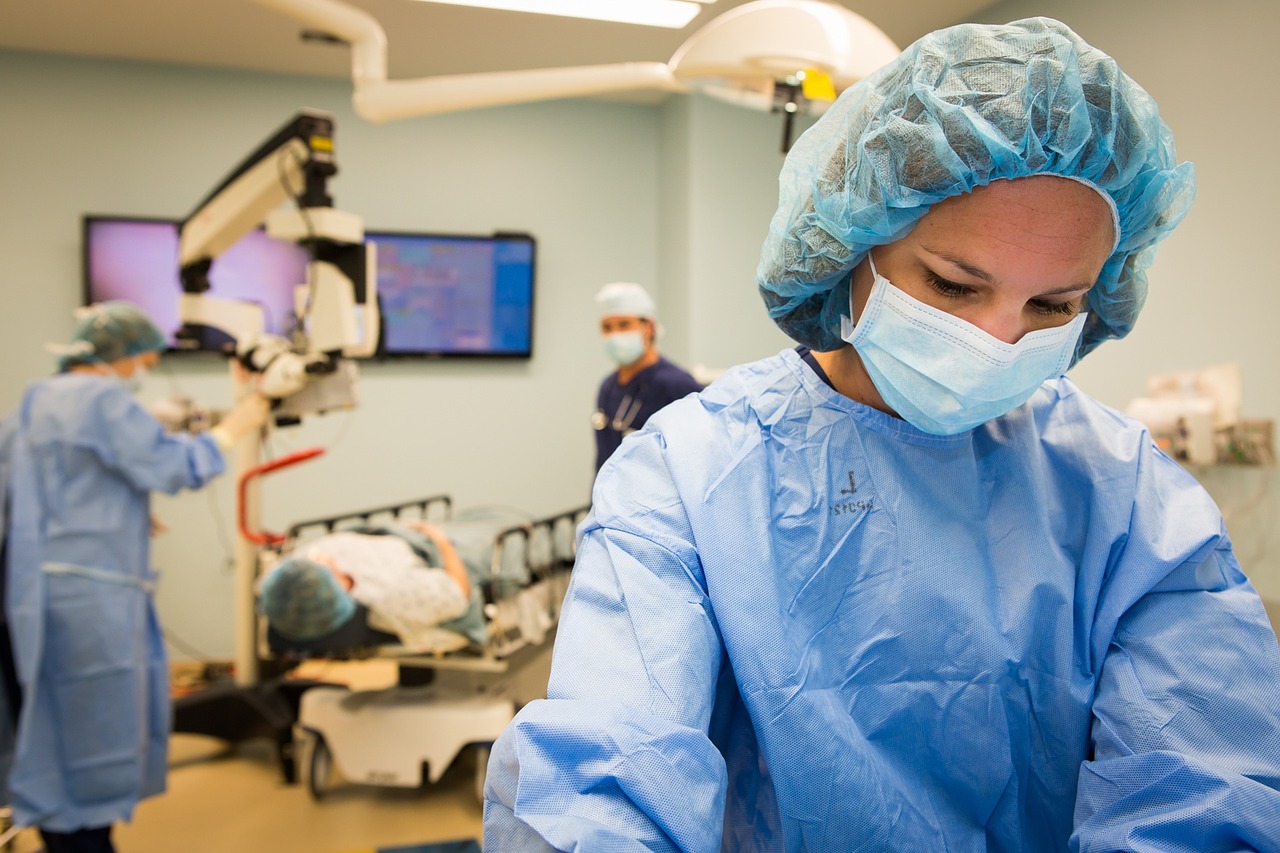
Healthcare can be a strong fit for veterans. Many service members already worked in fast-paced settings where attention to detail mattered every day. Medical assistants help clinics and healthcare offices run smoothly. Daily tasks may include taking vital signs, scheduling patients, updating records, helping during exams, and handling basic lab work
The work stays active. You are moving around and helping people directly. The Medical Assistant Program at CyberTex gives students hands-on training for entry-level healthcare work. Some veterans like this path because it can lead to work in doctor offices, urgent care centers, clinics, and specialty practices. Healthcare hiring also stays fairly steady in many areas. That matters when you need stable work after military service.
Vocational Nursing Can Lead to Stable Healthcare Work
Some veterans want more direct patient care. Vocational nursing may fit that goal. Licensed vocational nurses work closely with patients in hospitals, nursing homes, clinics, and rehabilitation centers.
The role can feel meaningful because you help people in your community. Veterans who worked in medical units or leadership roles can adjust well to the role of LVN.
The Vocational Nursing Program at CyberTex helps students prepare for the NCLEX-PN exam. This path can also create future options. Some LVNs later continue into other nursing roles after gaining work experience.
HVAC Training for Veterans
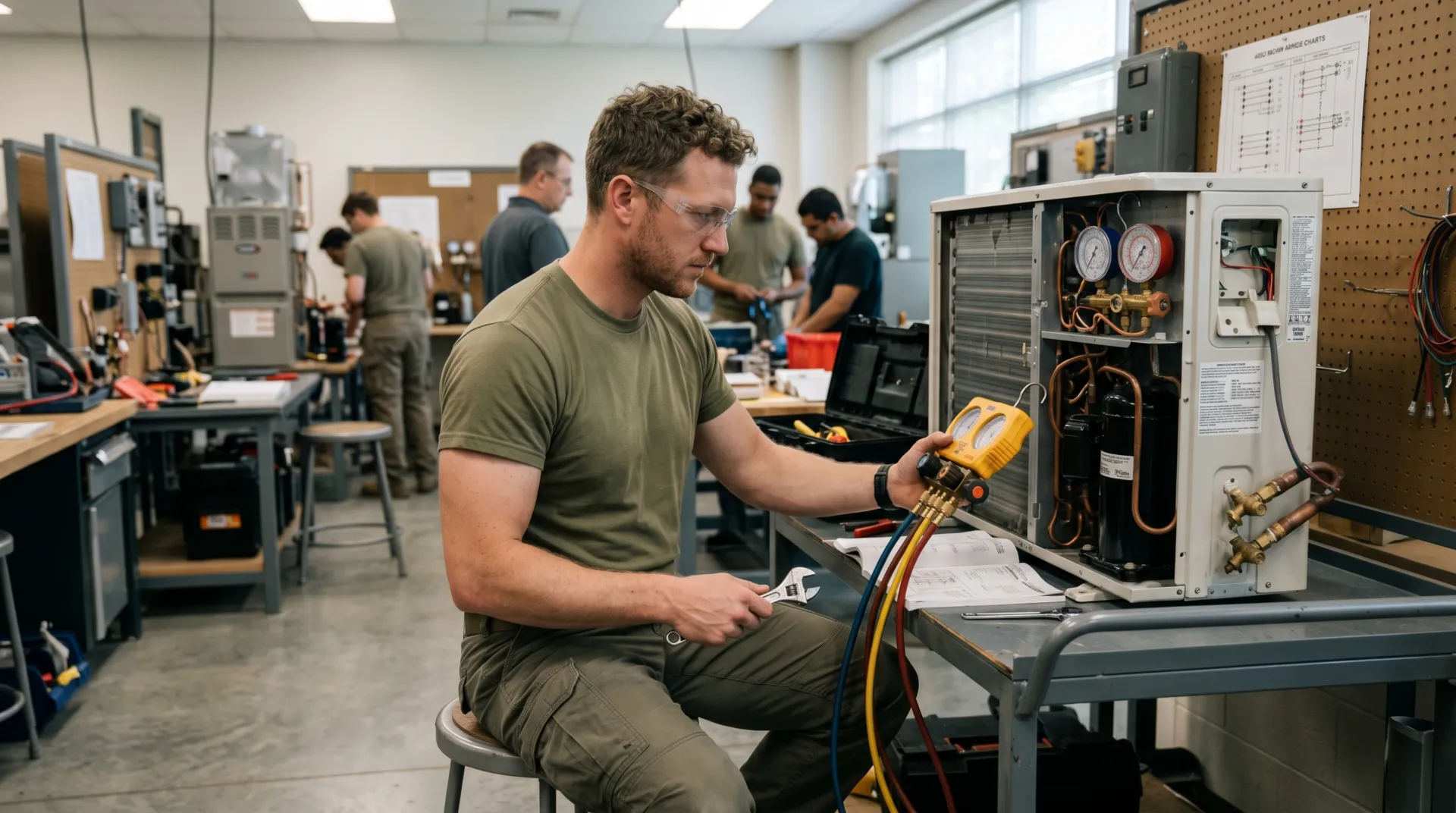
Not every veteran wants an office job. Some want physical work where they can stay active and solve problems. HVAC technicians work on heating and cooling systems in homes and businesses. Work changes daily. One day might involve repairs. Another day could involve installations or system testing. Veterans who worked with tools, maintenance systems, logistics, or mechanical equipment may enjoy this type of work.
The HVAC Technician Program at CyberTex teaches students how to work with:
- Air conditioning systems
- Heating systems
- Refrigeration equipment
- Electrical components
- Troubleshooting procedures
Texas heat also keeps HVAC work busy much of the year. That can help create steady job opportunities. And for many veterans, there is satisfaction in fixing a problem right in front of you. You see the result immediately.
IT and Network Support Careers for Veterans
Some veterans want a less physical career but still enjoy problem-solving. IT training can open doors fairly quickly compared to traditional college paths. Network support and IT roles may include:
- Setting up computer systems
- Fixing hardware problems
- Managing networks
- Helping users solve technical issues
- Monitoring system performance
Veterans often already understand procedures, security, and working under pressure. Those habits transfer well into IT environments. The Network Engineer Program at CyberTex focuses on practical computer and network skills that employers look for in entry-level candidates.
Technology jobs can also offer different work settings. Some people work in offices. Others work remotely or travel between locations. For veterans who enjoy systems and troubleshooting, this field can feel like a natural transition.
What Veterans Should Look for in a Training Program
Not all training programs feel the same. Some move too slowly. Others spend too much time talking about the work instead of actually teaching it. Many veterans want a program that feels practical, organized, and connected to a real career at the end.
Hands-On Learning- A lot of veterans prefer learning by doing the work. It is easier to build confidence when you practice the skills instead of reading about them in a book.
Clear Schedules and Structure – Programs with clear schedules can be easier to transition to after military service. Knowing what to expect each day helps many students stay focused and motivated.
Career-Focused Training – Some schools spend too much time on theory. Career-focused programs spend more time teaching the skills employers actually want.
Smaller Class Sizes – Smaller classes can make a big difference. It is usually easier to ask questions, get help, and stay involved during class discussions.
Instructors With Real-World Experience – Veterans often appreciate instructors who worked in the field themselves. Real examples from actual job sites or healthcare settings can make lessons easier to understand.
Resume and Interview Support – The civilian hiring process can feel unfamiliar at first. Resume help and interview preparation can make veterans feel more prepared when applying for jobs.
Starting Over Does Not Mean Starting from Scratch
A lot of veterans underestimate what they already bring into civilian careers. Military experience builds habits and skills that employers still value every day.
Time Management – Military service usually involves strict schedules and deadlines. That experience can help veterans stay organized and dependable at work.
Leadership – Many veterans already have experience leading teams or handling responsibility under pressure. Those skills transfer well into civilian careers.
Communication Skills – Clear communication matters in almost every job. Veterans often know how to work with different personalities and share information quickly.
Accountability – Employers value people who show up prepared and follow through on tasks. Military experience often builds that kind of responsibility naturally.
Problem-Solving Skills – Veterans are often used to thinking quickly when problems come up. Staying calm under pressure can help in healthcare, HVAC, IT, and many other careers.
Training programs simply help connect those strengths to a civilian career path. And sometimes veterans just need a faster bridge between where they are now and where they want to go next.
Short-term career training can help build that bridge without spending years out of the workforce.
Want to Learn More?
CyberTex is approved by the VA to accept Chapter 35 military educational benefits and help Veteran Dependents and Survivors move to the next stage of their career.
We offer short-term technical training programs in Information Technology, Medical, Healthcare, and Construction Trades. We are a student-centric institute that equips students with workplace skills for initial employment, paving the way for desired and financially stable careers.
Contact us today to learn more about our CyberTex campuses in Austin and Killeen.
Frequently Asked Questions (FAQs)
What are the best short-term training options for veterans?
Many veterans want training that leads to a job without spending years in college first. Healthcare, HVAC, and IT are common choices because the programs move faster and teach skills used on the job. The best fit usually depends on the kind of work you want to do every day.
Can veterans use GI Bill benefits for short-term career training?
Yes. Many short-term training programs accept GI Bill benefits for eligible veterans. Those benefits can help pay for tuition, books, and other school costs while you train for a new career.
How fast can veterans finish short-term career training programs?
Some programs take months instead of years to finish. That is a big reason many veterans choose this path after military service. You can train for a career and start applying for jobs much sooner.
Are short-term training programs worth it for veterans?
They can be a good fit for veterans who want to get back into the workforce quickly. Most programs focus on practical job skills instead of unrelated classes. A lot of veterans prefer that approach because it feels more direct and career-focused.
Are there veteran or military friendly schools in Texas?
Cybertex Institute of Technology is a proud veteran-friendly school, where the strength of our community shines through our dedicated instructors and determined students who are veterans. CyberTex has campuses in Austin and Killeen and is fully approved to accept veteran education benefits, empowering you on your educational journey. Connect with us today to speak with a VA School Certifying Official and take the next step towards your future!