


Imagine walking into a house where the air conditioner has stopped cooling. The homeowner is frustrated. It is 95 degrees outside, and the thermostat says 78. You check the thermostat. It seems fine. You hear the outdoor unit running, but the air coming through the vents feels warm.
What is wrong? Maybe it is a dirty filter. Maybe an electrical part has failed. Or perhaps something is blocking airflow. You cannot tell just by looking. This is where HVAC troubleshooting becomes one of the most interesting parts of working as an HVAC technician. The repair might take ten minutes. Finding the problem could take an hour.
And for students learning HVAC, that difference can be surprising.
HVAC Troubleshooting Starts Before You Pick Up a Tool
One thing new HVAC students discover is that broken equipment does not tell you what is wrong. A furnace might stop heating because of an electrical problem. An air conditioner might run without cooling because of poor airflow. Sometimes the problem is not where you expect it.
The First Clue Might Come from the Customer
Experienced HVAC technicians often begin by asking questions rather than opening equipment.
- When did the problem start?
- Does the system make an unusual noise?
- Has anyone worked on it recently?
Imagine a homeowner says their air conditioner stopped working after someone changed the thermostat. That does not prove the thermostat is faulty. But it gives you somewhere to start.
As a student, you learn that listening is part of finding the problem. Customers may not know what failed, but they often notice when something changed.
Why Guessing Can Get Expensive
Suppose an air conditioner is not cooling, and someone assumes it needs more refrigerant.
Adding refrigerant without testing can create new problems. A clogged filter or dirty coil could be the real cause. Replacing parts without checking them also wastes money.
That is why HVAC students learn to test their ideas before making repairs. The goal is not to guess correctly. It is to find evidence that explains what the system is doing.
Why HVAC System Diagnostics Can Be Frustrating at First
During your first HVAC lab sessions, you might expect every problem to have a clear answer. You learn what a component does. You practice working with it. Then your instructor gives you a system that is not working correctly. Suddenly, knowing the parts is not enough.
Several Problems Can Look Almost Identical
An air conditioner that will not start could have a failed capacitor, faulty contactor, or power supply problem. From the homeowner’s perspective, each problem looks the same. The air conditioner simply will not turn on. You have to learn how to tell those problems apart.
Picture yourself checking a system during class. You think the capacitor is faulty, but your instructor asks you to perform another test. The capacitor is fine. That moment can be frustrating, especially when you felt sure about your answer. But it teaches you something useful. You cannot depend on a single symptom.
Learning HVAC Troubleshooting Skills in the Lab
Watching someone diagnose an air conditioner looks easier than doing it yourself. An instructor may connect a meter, take a reading, and identify the problem in minutes.
You try the same task and spend several minutes figuring out where to start. That is normal for someone new to HVAC.
Learning What Your Tools Are Telling You
Multimeter
A multimeter measures electrical values such as voltage and resistance. You learn what readings mean during different tests.
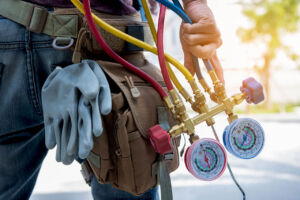
Refrigerant Gauges
These help trained technicians check system pressures. You also need temperature readings and other information to understand the results.
Temperature Tools
Thermometers help compare temperatures at different points. You might discover that the system produces cool air, but little reaches the rooms. Students also learn safety steps before working near electrical parts or refrigerant. A number on a screen means little until you understand what it tells you.
When the System Finally Makes Sense
There is often a point when you stop thinking about HVAC equipment as separate parts.
You begin seeing how one problem affects another. For example, poor airflow across an indoor coil can cause ice to form. A new student might focus on removing the ice. Someone with more practice asks why the coil froze. That change in thinking matters. You are learning to look beyond what is visible.
Sometimes the Hardest HVAC Problems Come and Go
Some HVAC problems are difficult because they do not happen all the time. A system might work perfectly when the technician arrives. Then it stops again two hours later.
When the Equipment Works During the Service Call
Imagine a customer says their air conditioner shuts off every afternoon. You arrive in the morning, and everything works. Now what? You might need to check operating conditions or ask more questions about when the shutdown happens. Perhaps the problem appears when outdoor temperatures rise. Maybe an electrical connection fails after equipment heats up.
You still need tests to confirm the cause. A system working right now does not prove that nothing is wrong.
Small Details Can Change the Diagnosis
A loose wire might cause problems only when equipment vibrates. A drain line might allow some water through but back up during heavy use. A dirty outdoor coil might cause trouble when the air conditioner runs for long periods. These details can be easy to miss. And finding them sometimes takes longer than replacing the faulty part.
Why Experienced HVAC Technicians Ask So Many Questions
Watch an experienced HVAC technician inspect a system, and you might notice how often they stop. They check a reading. They look at another component. Then they check something again. To a new student, it can seem like they are moving slowly. But they may be ruling out problems before making a repair.
A Good HVAC Technician Does Not Always Have an Instant Answer
Customers sometimes expect technicians to know what is wrong immediately. That is not always realistic. An experienced technician might say, “I have a few things I need to check first.” As you learn HVAC troubleshooting, you also practice explaining what you are checking. You might need to explain why you are testing electrical parts when the complaint is warm air. The customer should understand why you have not started replacing anything.
Knowing When to Ask for Help
New HVA technicians encounter problems they have never seen before. Maybe a control board displays an unfamiliar fault code. Or your readings do not match what you expected.
This is when asking an instructor or experienced coworker matters. A wrong diagnosis can lead to repeat service calls. Some mistakes can also create safety risks. Knowing when to stop and ask is part of learning the job.
HVAC Repair Training: Finding the Cause Before Replacing the Part
Learning to replace a component and learning why it failed are different tasks. You might become comfortable replacing a capacitor after practicing several times. But during a service call, you still have to confirm that the capacitor is faulty.
The Repair Might Be the Easy Part
Consider a failed contactor in an outdoor air conditioning unit. Once a qualified technician confirms the problem and makes the equipment safe, replacement may be straightforward.
But getting to that point takes more thought. The HVAC technician may need to check incoming power, control signals, and related parts. The repair might be quick. The diagnosis requires understanding how the system should operate. And the work is not finished just because the equipment starts running again. You still need to check that the system operates correctly.
What HVAC Students Discover About Patience
You might spend twenty minutes testing a system and still not know what is wrong. Another student might solve the same problem faster. That can make you question whether you are good at this work. But speed is not the best measure of progress when you are learning.
You Start Remembering Problems You Have Seen Before
The first time you encounter a faulty component, you may need help finding it.
The next time, you recognize some symptoms. After several similar problems, you may know which tests to perform first. You begin remembering readings and patterns that once seemed confusing. Eventually, you may find a loose connection after ruling out several other causes.
The repair itself could be simple. But you know why the system failed. You did not guess.
Learning HVAC Troubleshooting at CyberTex
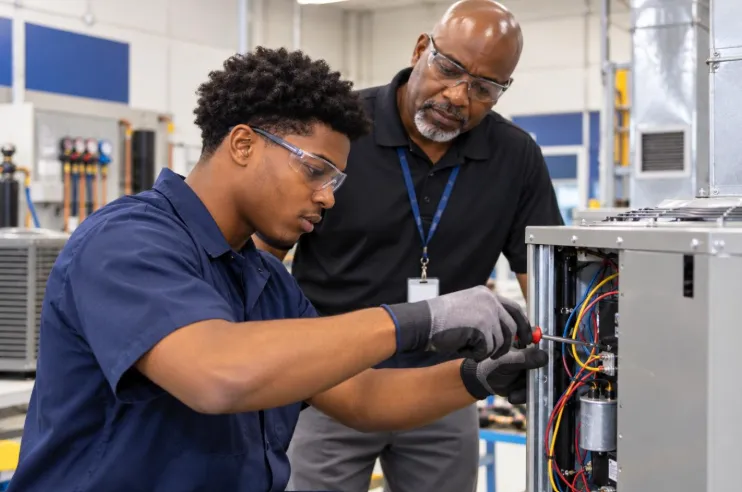
At CyberTex, students in the HVAC Technician program learn about heating and cooling systems and the tools used to work on them. Understanding how components operate comes before learning to diagnose faults. An instructor might explain an electrical circuit, then show students how to test it.
Students need practice applying those lessons to equipment. Early in training, you may check a component because your instructor tells you to. Later, you begin asking why that component needs to be checked. You start thinking about what a reading should show before taking it. That is how troubleshooting begins to make sense.
The next time an air conditioner stops working, remember that the visible problem may be only a symptom. Finding the actual cause takes practice, patience, and knowing what to check next. Sometimes the smallest repair requires the most thought.
Frequently Asked Questions About HVAC Troubleshooting
Do you need to be good at math to learn HVAC troubleshooting?
You need basic math skills for measurements, electrical calculations, and temperature readings. Most calculations involve simple arithmetic and formulas. Students practice using these calculations during training.
Can you learn HVAC troubleshooting without previous mechanical experience?
Yes. HVAC training introduces beginners to system components, tools, and testing methods. You start with basic concepts before working through more difficult problems. Previous mechanical experience can help, but it is not required to begin learning.
How long does it take to become good at HVAC troubleshooting?
There is no set timeline. Students begin learning troubleshooting during training, but diagnosing unfamiliar problems becomes easier with workplace experience. Even experienced HVAC technicians encounter problems that require research or help from coworkers.
Do HVAC technicians use computers to diagnose problems?
Yes. Some modern HVAC systems have digital controls, fault codes, and built-in testing features. Technicians may use diagnostic software or digital tools to read system information. They still need to understand the equipment to interpret those results.
Is HVAC troubleshooting harder for heating systems or air conditioners?
Both can be challenging. Heating systems may involve ignition controls, gas components, and safety switches. Air conditioners involve refrigerant circuits, electrical parts, and airflow. The difficulty depends on the system, the symptoms, and the technician’s experience.
HVAC Program
Want to achieve HVAC certifications to start a rewarding career as an HVAC technician in Texas? With more than two decades of success in the medical, health, and IT sectors, we added an HVAC course to our curriculum. We proudly announce that we have flexible day and evening classes for the HVAC program at our Killeen and Smithville campuses.
CyberTex’s HVAC program can be completed in as little as 11 months by attending full-time with the flexibility of day and evening classes. You can take the EPA–608 certification from the US Environmental Protection Agency with our training.
Want to learn more? Contact us today.