



Cybersecurity training rarely begins the way people expect. Ask someone what cybersecurity looks like, and they’ll probably picture someone stopping hackers from halfway around the world. That image comes from movies more than real life.
Walk into your first week of IT security training, and you’ll probably spend more time talking about computers, networks, and how information moves from one device to another. At first, that can feel surprising. Then it starts to make sense. You cannot recognize suspicious activity until you understand what normal activity looks like.
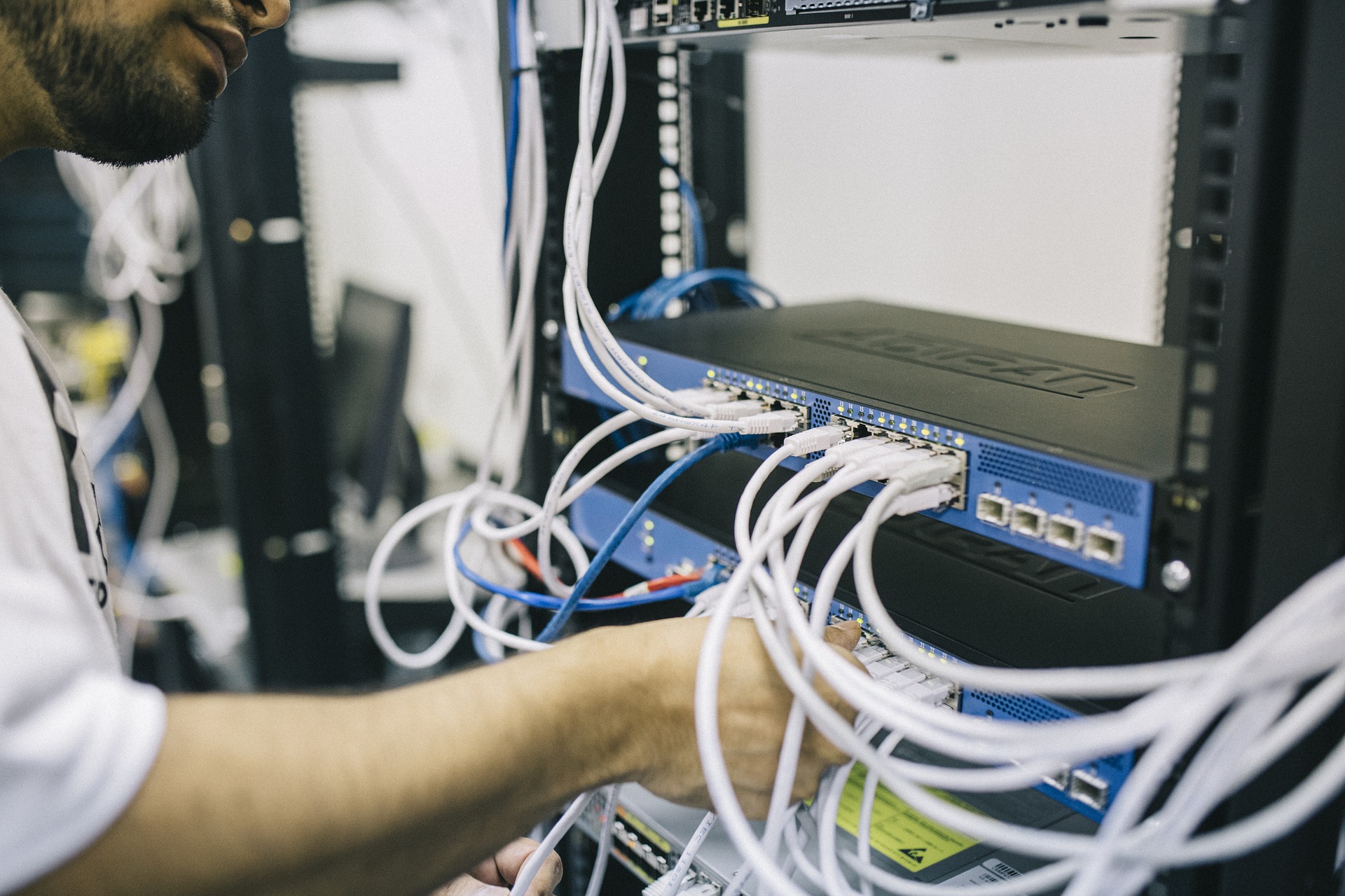
That is why cybersecurity classes often begin with the basics. You learn how computers communicate, why devices need IP addresses, how networks are organized, and what happens every time you open a website or log into an account. Those ideas become the building blocks for everything that follows.
If you are wondering how to start a career in cybersecurity, it helps to know that most students do not arrive with years of IT experience. They build those skills one lesson, one lab, and one troubleshooting exercise at a time. Before long, problems that looked impossible during the first week start feeling familiar.
The First Week Usually Changes People’s Expectations
There is usually one moment during the first week when everyone realizes cybersecurity is not really about hacking. It might happen during a networking lesson. Or while following data as it travels between two computers. Someone inevitably asks, “When do we get to the security part?” The answer is simple. This is the security part. Protecting a network starts with understanding how that network works. If you cannot explain why a computer is communicating with another device, it becomes much harder to recognize when something unusual happens. That is why networking comes before advanced security topics.
Looking for Normal Before Looking for Suspicious
One exercise might involve tracing the path information takes across a small network. There are no flashing warning screens or dramatic countdowns. Instead, you begin noticing details that most people ignore.
- Which device sent the request?
- Where did it go?
- Why did it take that route?
Those questions may seem basic at first. A few weeks later, they become second nature because you are learning what “normal” looks like before you try to identify cyber threats, unusual activity, or system vulnerabilities.
The Moment Everything Starts to Make Sense
Many students say this is when cybersecurity begins to feel less mysterious. They stop thinking about Hollywood hackers and start thinking about systems, patterns, and small details that most users never notice.
That shift matters because successful IT professionals rarely jump to conclusions. They collect information first, rule out possibilities, and then decide what needs attention. It is a way of thinking that carries through every lab and eventually into the workplace.
You Learn to Think Like the Person Trying to Break In
Small mistakes usually cause the biggest problems. Most security incidents do not begin with someone wearing a hoodie in a dark room. They begin with ordinary mistakes. Someone clicks an email they should not have opened. A password gets reused across several accounts. A software update is ignored because everyone is busy.
On their own, none of those decisions seem like a big deal. Together, they can create an opening that someone else eventually notices. That is one of the biggest shifts students experience during cybersecurity training. Instead of asking, “How would someone hack this?” they begin asking, “What weakness would make this easier?” It is a subtle change in thinking. But it changes everything.
Looking at Systems Through a Different Lens
One instructor might place a sticky note with a password on a classroom monitor before students arrive. Most people walk right past it. Eventually someone notices. That small discovery turns into a discussion about physical security, password habits, and how protecting information often starts long before someone logs into a computer.
Exercises like this remind students that cybersecurity is about people just as much as technology. Firewalls and antivirus software matter, but human behavior often determines whether those tools succeed or fail. You start noticing habits that never stood out before. A shared login. An unlocked computer. Someone downloading software without thinking twice.
After a while, you cannot help but see potential risks everywhere.
Curiosity Becomes One of Your Best Tools
There is a question that comes up again and again during lab exercises. “Why did that happen?”
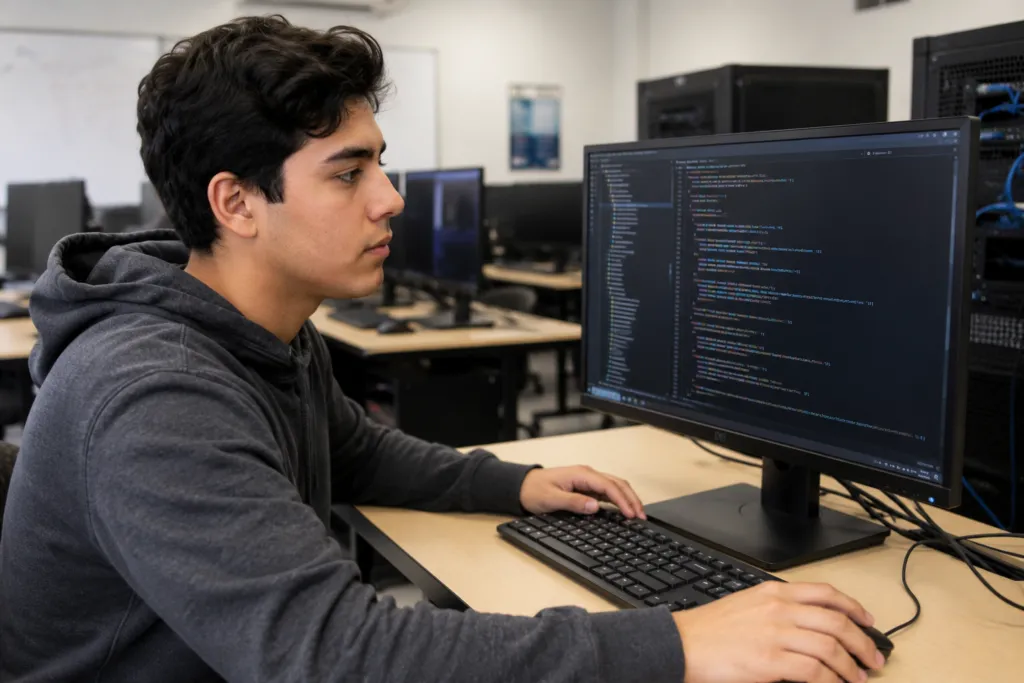
Good cybersecurity professionals ask that question constantly. Instead of accepting that a computer stopped responding or an alert suddenly appeared, they start tracing events backward. They look for clues. They test assumptions. Sometimes the first answer is wrong, so they try another path. That habit carries into almost every part of IT security. The goal is rarely to memorize every possible threat. The goal is learning how to investigate a problem without jumping to conclusions. Curiosity becomes more valuable than having every answer.
The Screen Starts Talking Back
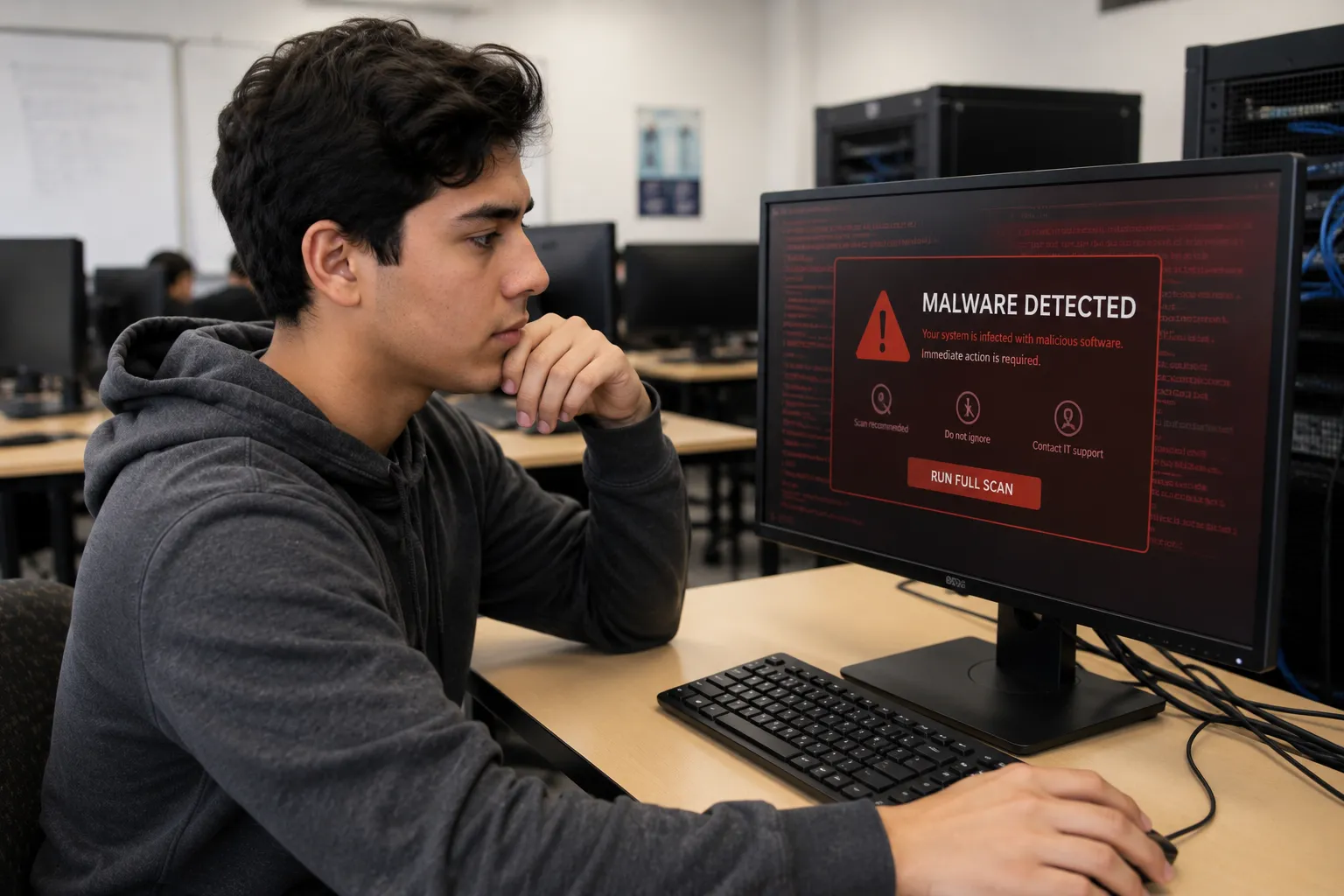
At first, everything looks like noise. The first time you open a packet analyzer or scroll through a system log, it can feel like staring at a language you have never seen before. Numbers. IP addresses. Timestamps. Messages moving in every direction.
Most students have the same reaction. “How is anyone supposed to make sense of this?” Then an instructor points out one detail. Then another. Before long, you stop looking at random lines of information and start recognizing patterns.
The screen has not changed. You have.
Every Alert Has a Story
Security alerts rarely tell you exactly what happened. They simply tell you something deserves a closer look. Maybe a user logged in from an unusual location. Maybe a computer tried to contact a server it has never communicated with before. Sometimes the alert turns out to be harmless. Other times it uncovers a problem that needs attention.
The goal is not to guess. The goal is to investigate. That is why cybersecurity labs often feel more like solving a puzzle than completing a worksheet. Every clue answers one question while raising another.
You Stop Memorizing and Start Investigating
There is a point during training when students stop asking, “What is the correct answer?”
Instead, they ask better questions.
- “What changed?”
- “Does this belong here?”
- “What happened just before this?”
Those questions lead to observations. Observations lead to evidence. Evidence leads to answers.
That way of thinking becomes one of the most valuable IT security skills you can develop. Software changes. Security tools change. Attack methods change. Learning how to investigate does not.
You’ll Probably Break Things. That’s Part of Training.
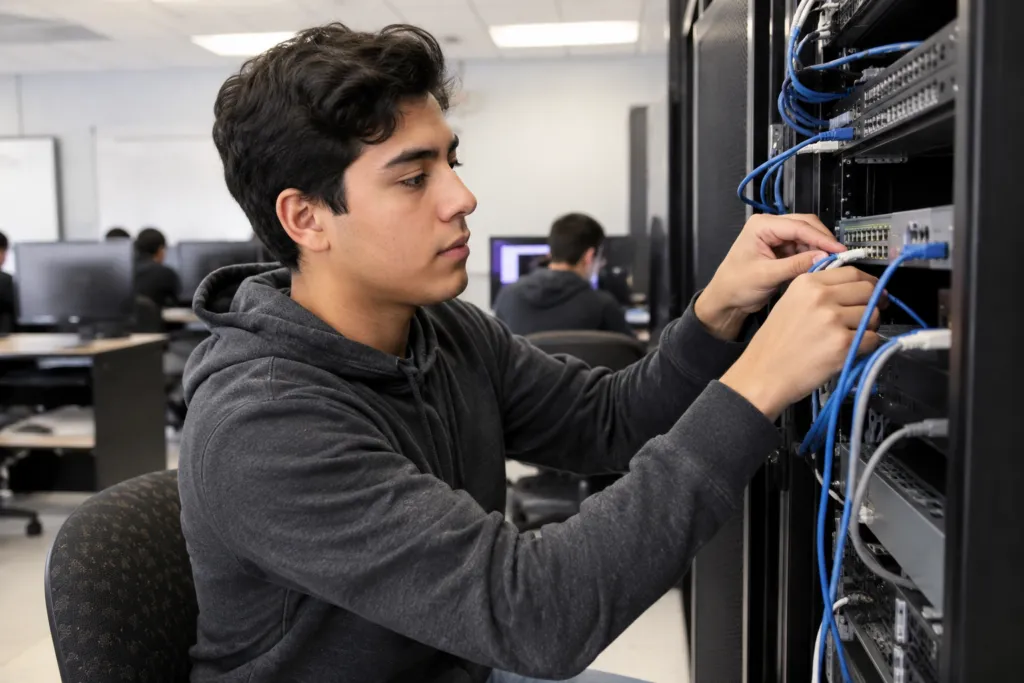
The lab is built for mistakes. Breaking something during training feels terrible for about five seconds. Then the instructor smiles. That reaction surprises many students. They expected mistakes to be failures. Instead, mistakes become the lesson.
Virtual labs exist for exactly this reason. You can misconfigure a firewall, disconnect a system, or accidentally lock yourself out of a virtual machine without affecting a real business. The problem becomes something you fix instead of something you fear.
Troubleshooting Becomes Second Nature
Nobody remembers every command. The people who succeed usually know where to start looking. They retrace their steps, compare settings, and test one possibility at a time until the answer begins to appear. That habit follows you long after training ends because every IT professional spends time troubleshooting. The technology changes. The process rarely does.
The Best Students Are Usually Curious, Not Computer Geniuses
Some people delay enrolling because they think everyone else already knows more than they do.
That assumption usually disappears after the first few weeks. Every classroom has students with different backgrounds. Some have built gaming computers. Others have never touched the inside of a computer. Some have worked in customer service. Others are changing careers after years in another industry.
The students who keep improving are rarely the ones with the most experience. They are the ones who keep asking questions. Successful students want to know why something happened instead of simply accepting the answer. They try another approach when the first one fails. Curiosity has a way of closing the experience gap.
Frequently Asked Questions (FAQs) About Cybersecurity Training
Do I need IT experience before starting cybersecurity training?
No. Many students begin with little or no professional IT experience. The early part of training focuses on computer and networking fundamentals before moving into security concepts.
Is cybersecurity training mostly hands-on?
Classroom instruction explains the concepts, but labs give you the chance to apply them. Many students find they remember more after solving problems themselves than they do from simply reading about them.
What jobs can I pursue after completing cybersecurity training?
Many graduates begin in entry-level IT or security support roles where they monitor systems, troubleshoot issues, and help protect business networks while continuing to build experience.
Does cybersecurity training prepare students for certifications?
Many programs introduce the technical concepts covered by popular industry certifications. CyberTex prepares students for 14 IT certifications. Those certifications include CompTia, AWS and Microsoft Azure.
Is cybersecurity a good choice for someone who enjoys solving problems?
It can be. Every day involves gathering information, asking questions, and working through problems step by step. If you enjoy figuring out why something happened, you may find the work especially satisfying.
Explore Cybersecurity Training at CyberTex
Every cybersecurity professional starts in the same place. They learn how computers work, how networks communicate, make mistakes in a lab, ask questions, and slowly begin seeing patterns that most people never notice.
That is exactly why the Network Engineer program at CyberTex starts with strong networking fundamentals before introducing more advanced security concepts. You build your knowledge one step at a time, using classroom instruction alongside hands-on labs that mirror the kinds of challenges found in real IT environments.
Want to Learn More?
IT careers have become essential not just in Austin & Killeen but globally, and there is no better time to pick one up than now. In 2021, Austin was ranked #1 in Best Tech City for IT jobs by CompTIA, and the demand is only growing.
Ready to start a rewarding and challenging career in IT as a cybersecurity specialist? The Cybersecurity Specialist Program at CyberTex prepares you for advanced computer networking and security jobs. You will learn the skills and abilities to set up, install, configure, repair, and manage modern computer networks and their security. Contact us today to learn more about our Cybersecurity Specialist program.