



Sitting in a network engineer class can feel intimidating at first. I hear that concern from new students. A lot of people assume everyone in an IT classroom has been building computers since middle school or can explain networking terms without thinking about it. That’s usually not true.
Many students start with little experience. They know they enjoy technology. Maybe they’re the person friends call when Wi-Fi stops working. Maybe they’ve worked in retail, customer service, warehouses, healthcare, or another field and want something different.
What surprises many students is how much of networking can be learned step by step. At CyberTex, network engineer training focuses on building skills to prepare students for entry-level IT roles. You learn how computers communicate, how networks are connected, and how to identify problems when something stops working.
What Is a Network Engineer Class?
When people hear the phrase “network engineer,” they often picture someone sitting in a dark room, wearing a hoodie, surrounded by servers. The reality is much more practical. A network engineer class teaches you how computer networks function and how businesses keep devices connected. Every company relies on networks. Computers, printers, phones, wireless devices, and cloud systems all need to communicate with each other.
Before understanding networking, you may have thought the internet was just something that magically worked. Then you started learning what happens behind the scenes.
You begin learning how information moves from one device to another, how equipment connects, and why things stop working. And sometimes that’s where it starts getting interesting.
Many students discover they enjoy solving technical problems far more than they expected.
Networking Fundamentals Students Learn First
One thing that catches students off guard is the amount of new vocabulary. You’ll hear terms like:
- IP address
- Router
- Switch
- LAN
- WAN
- Wireless network
At first, it can feel like everyone is speaking a different language. Then something clicks. You begin connecting the terms to real things you’ve seen every day. For example, most students already use a router at home. They just may not know what it’s doing.
A networking instructor might explain how your laptop, phone, smart TV, and gaming console all share the same internet connection through that device. Suddenly networking feels less mysterious. During network engineer classes, students also learn:
- Basic network communication
- Wired networks
- Wireless networks
- Device connectivity
- Network layouts
- Common networking terms
Many students discover that networking isn’t about memorizing terms. It’s about understanding how devices communicate.
Hands-On Skills You Practice During Network Engineer Training
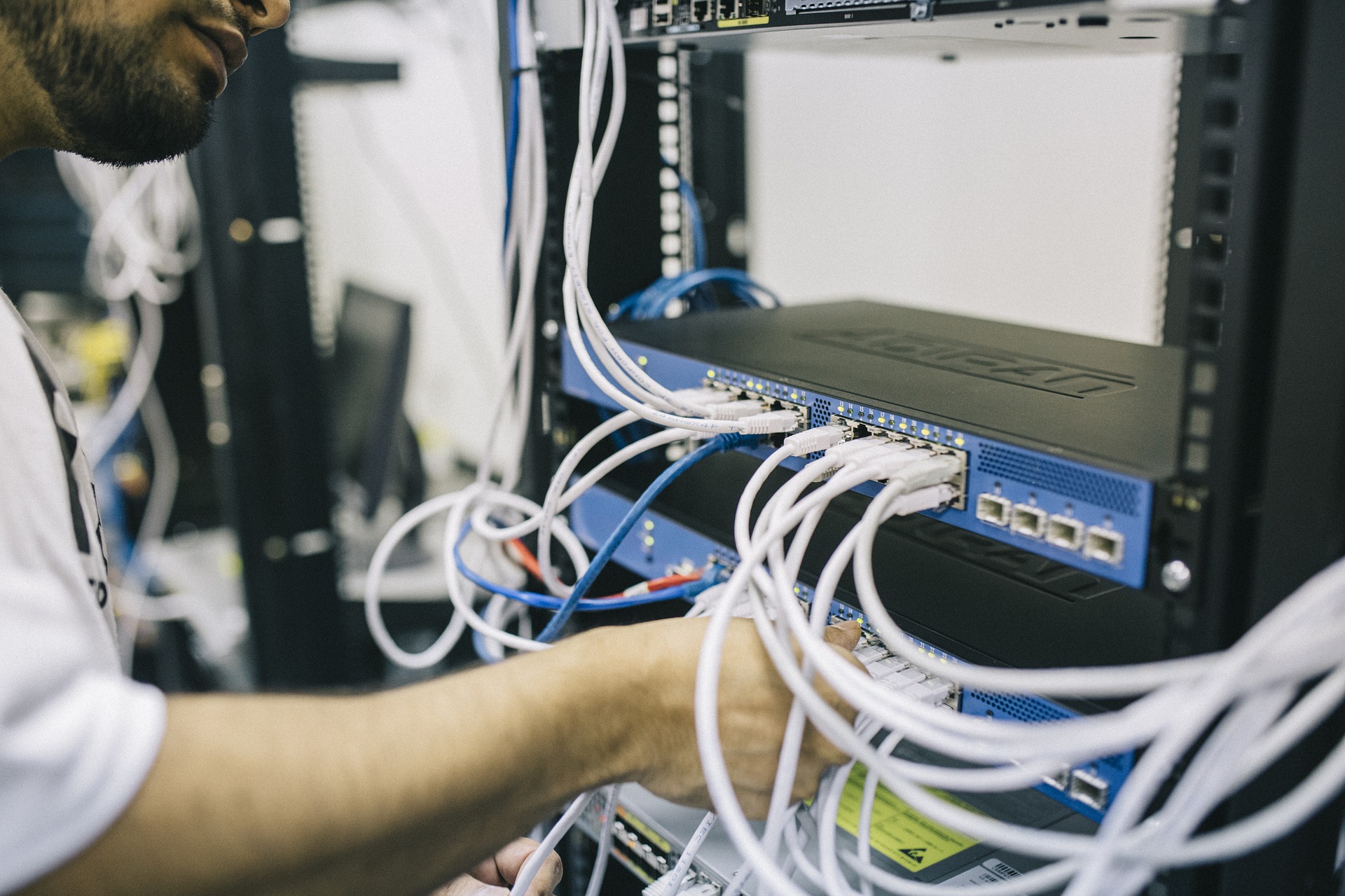
Reading about networking and working with networking equipment are two very different experiences. That’s why hands-on training matters. Students spend time working with equipment, cables, and network devices while practicing skills they will continue building throughout training.
A typical exercise might involve connecting equipment and testing whether devices can communicate properly. The first time something doesn’t work, students often assume they did everything wrong. Usually, it’s something simple. Maybe a cable isn’t connected completely, a setting was entered incorrectly, or one device isn’t communicating with another. Finding those issues becomes part of the learning process. You begin developing troubleshooting habits. That’s a skill employers value because technology problems happen every day.
What Students Notice During Their First Networking Labs
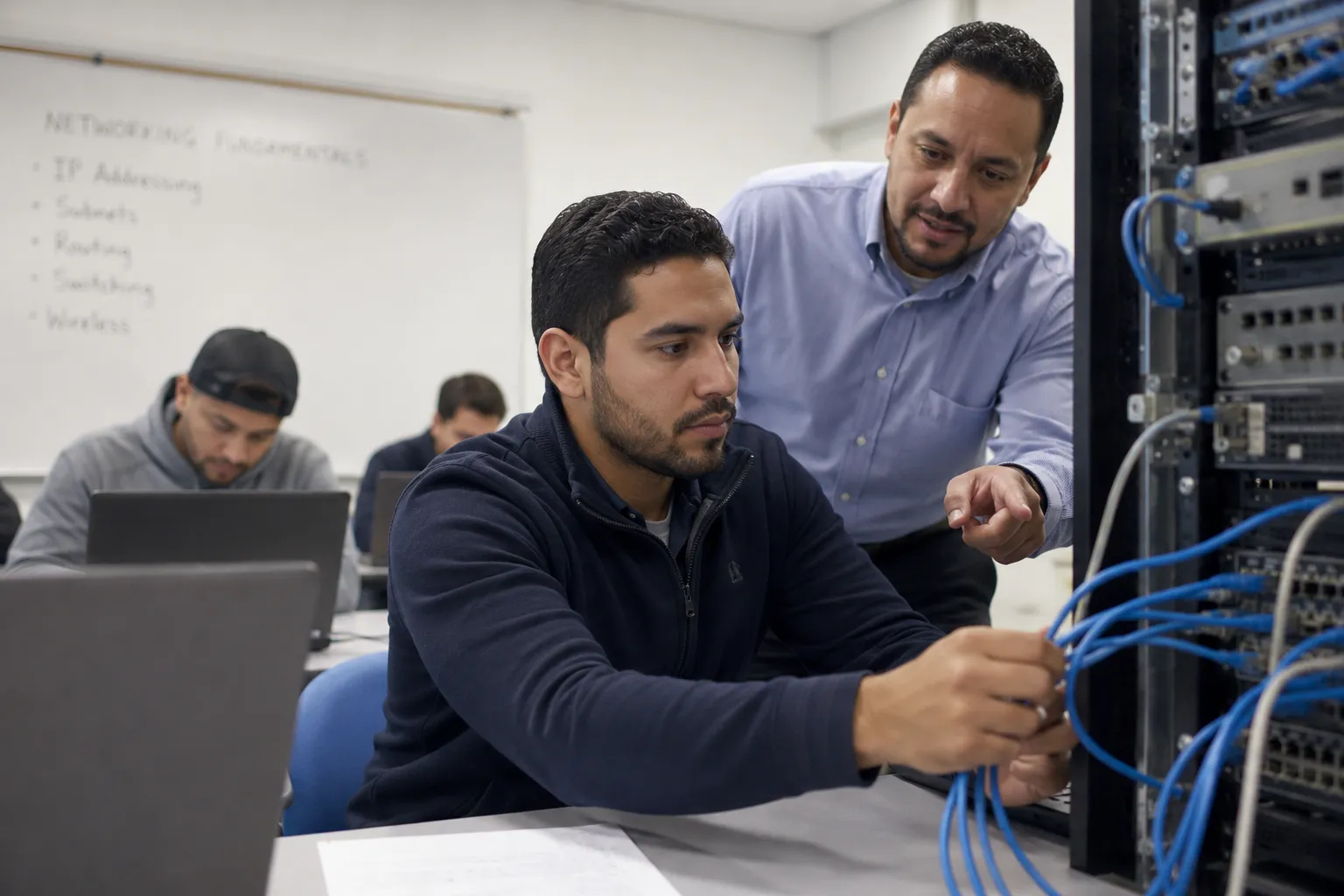
Most students remember their first networking lab. There’s usually a moment when everything feels unfamiliar. You might look at equipment sitting on a desk and wonder where to start. Then the instructor walks through the process. You connect devices, test connections, and check settings. You make mistakes. Then you fix them. And that’s often where confidence starts growing.
I’ve heard students say they learned more from fixing one mistake than from reading several chapters from a textbook. That makes sense. When something doesn’t work and you figure out why, the lesson tends to stick. Many students also enjoy the moment when they see devices communicating correctly for the first time. It feels like solving a puzzle.
IT Support Skills That Build a Strong Foundation
Networking knowledge is important, but technical careers often require more than technical knowledge. Students also learn skills used in IT support environments. That includes:
- Problem solving
- Communication
- Documentation
- Technical support processes
- Customer interaction
Think about a situation where an employee calls because they can’t access a company system.
The issue might be technical. But the employee still needs someone who can explain the problem clearly and help them stay calm.
Students sometimes focus only on hardware and software. Employers often notice communication skills just as quickly. A network technician who can solve problems and explain solutions clearly is valuable.
Network Security Concepts Students Are Introduced To
Security becomes part of almost every technology discussion. Students are introduced to basic concepts that help protect users and networks. Topics may include:
- Password security
- User permissions
- Safe computing practices
- Common cyber threats
- Security awareness
One thing students quickly discover is that many security problems aren’t caused by advanced hackers. Sometimes it’s something simple. A weak password, a suspicious email, or an account that wasn’t secured properly. Understanding these basics helps students develop good habits early.
How Network Engineer Classes Prepare Students for Entry-Level IT Careers
Many students enroll because they want practical skills that can help them start working in IT.
As training progresses, you begin seeing how networking knowledge applies to real workplaces. You may find yourself thinking differently about the technology around you.
You walk into an office and start noticing wireless access points, or notice network equipment mounted on walls and start wondering how everything is connected. That’s usually a sign you’re developing a networking mindset.
Training can help prepare students for entry-level careers involving network support, technical support, and IT systems. The biggest change many students describe isn’t what they know. It’s how they think. Instead of seeing a problem, they start asking questions.
- What’s causing it?
- What changed?
- How do I test it?
That’s the mindset employers want to see.
Is a Network Engineer Class Right for You?
Many students worry they’re starting too late. Others worry they don’t have enough technical experience. I’ve seen people from completely different backgrounds explore networking training. Some recently graduated from high school. Others spent years working in another field.
A common theme appears again and again. They started knowing less than they thought they needed to know. What helped was showing up, practicing, asking questions, and working through challenges one step at a time. If you enjoy technology, solving problems, and learning through hands-on activities, networking training may be worth exploring. You don’t have to know everything before you start. Most students don’t.
Frequently Asked Questions (FAQs) About Network Engineer Classes
Do I need experience before taking a network engineer class?
No. Many students begin training with little or no networking experience. Training starts with foundational concepts and builds from there.
What do you learn in a network engineer class?
Students learn networking fundamentals, device connectivity, troubleshooting, network hardware, technical support concepts, and basic security practices.
How long does network engineer training take?
The program at CyberTex can be completed in 45 weeks, attending full-time. Speak with CyberTex admissions for current program details and scheduling options.
Can a network engineer class help prepare me for an entry-level IT career?
Yes. Students build technical and troubleshooting skills that are commonly used in networking and IT support environments.
What skills do employers look for in networking and IT support candidates?
Employers often look for problem-solving ability, communication skills, technical knowledge, troubleshooting skills, and a willingness to continue learning.
Explore Network Engineer Training at CyberTex
The easiest part for many students is deciding to start. Once training begins, many students realize they can learn far more than they expected. If you’re interested in technology and want to learn through hands-on practice, explore the Network Engineer program at CyberTex. Speak with admissions, visit a campus, and learn more about scheduling options and training opportunities.
Want to Learn More?
Ready to become a network engineer? IT careers have become essential not just in Austin but globally, and there is no better time to pick up than now. In 2021, Austin was ranked #1 in Best Tech City for IT jobs by CompTIA, and the demand is only growing.
Ready to start a rewarding and challenging career in IT as a network engineer? The Network Engineer Program at CyberTex prepares you for advanced computer networking & security jobs. You will learn the skills and abilities to set up, install, configure, repair, and manage modern computer networks and their security.
Contact us today to learn more about our Network Engineer program.