




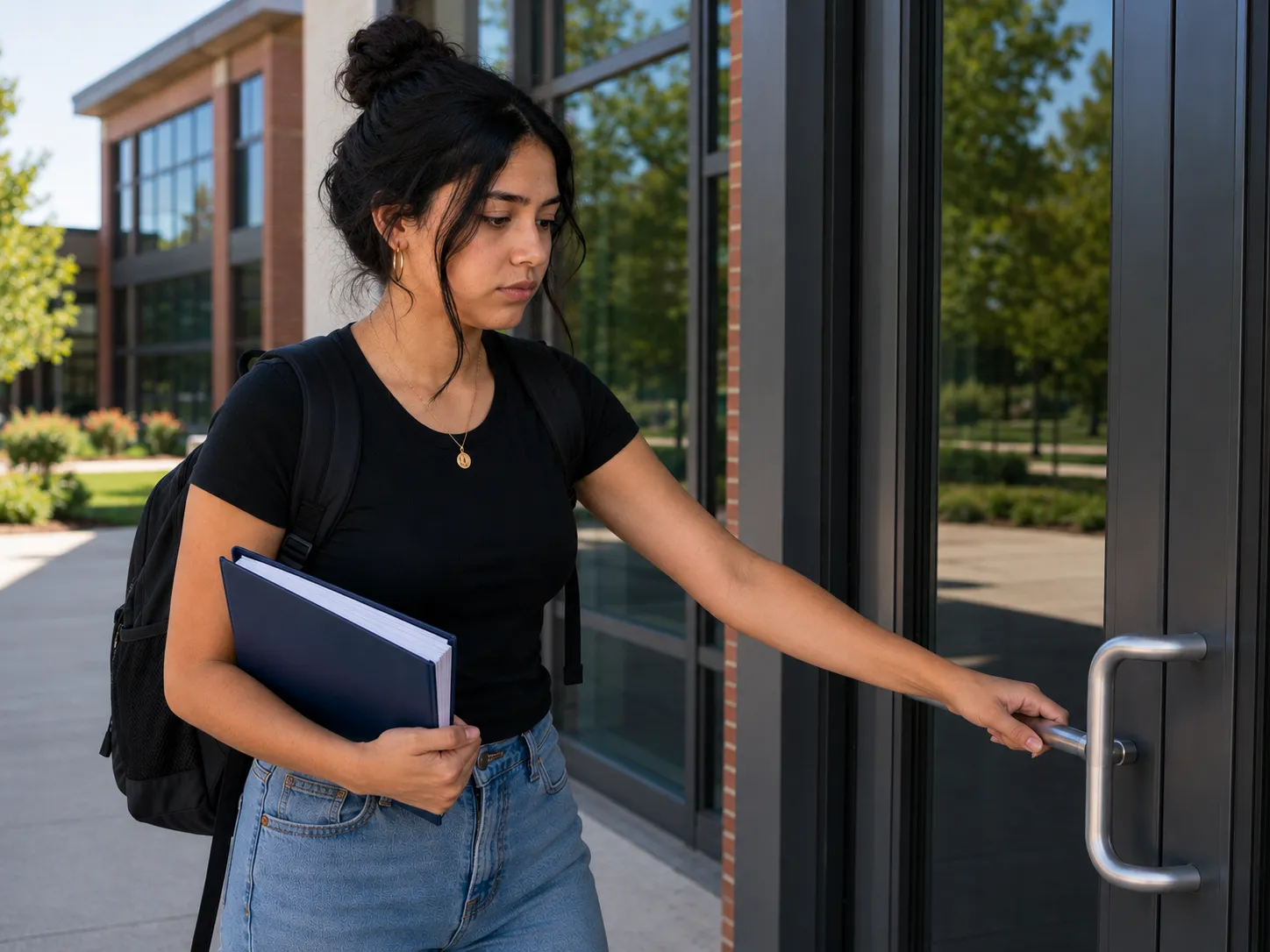
Imagine standing outside a building for the first time, with your hand on the door, wondering what waits on the other side of the door. You see people walking in and out. You know what happens inside could change your future. But until you open the door yourself, your mind starts filling in the blanks.
Maybe the process is complicated. Maybe everyone else already knows what they are doing. That is how many people feel before they apply to HVAC school. Then they take the first step.
Instead of a confusing process, they find a conversation. Instead of being expected to know everything, they discover they are there to learn. Questions get answered. The next steps become clear. What seemed uncertain starts to feel manageable.
If you have been wondering how to apply to HVAC school, understanding the process ahead of time can make that first step much easier. This guide walks through what you need before you apply, what happens during the admissions process, and how to prepare before your first day.
What Does It Mean to Apply to HVAC School?
If you have never applied to a trade school before, you may not know what the process involves. Unlike applying to a four-year college, applying to an HVAC program is often much more straightforward. The goal is not to overwhelm you with paperwork or entrance exams. Instead, the admissions process helps you learn about the program, understand the requirements, and decide whether the training is the right fit for your goals.
Most students move through a series of simple steps. They contact the school, meet with an admissions representative, review the program, complete any required paperwork, and prepare for their start date.
Along the way, you have opportunities to ask questions, tour the campus, and learn what your training could look like before you ever step into an HVAC lab. If you have been wondering how to apply to HVAC school, understanding these steps can make the entire process feel much more manageable.
How to Apply to HVAC School
One thing surprises a lot of students. You usually do not need to satisfy a long checklist before you can begin the application process. Many people picture admissions as collecting stacks of paperwork before anyone will even speak with them. That is rarely how it works.
Most schools simply want to learn about you and help you understand your next steps.
Basic Admission Requirements
Most applicants should have:
- A high school diploma or equivalent
- A valid form of identification
- Basic contact information
- Time to meet with an admissions representative
That is usually enough to start the conversation. Notice what is missing from that list. There is no requirement to know how to repair an air conditioner. Nobody expects you to know how a heat pump works. You do not need years of construction experience or a toolbox full of professional equipment.
The program starts by teaching the basics before moving into more advanced topics.
Some students worry they are missing a document or are not sure where to find it. That happens more often than you might think.
Admissions representatives regularly help students gather the information they need. If something is missing, they can explain what to do next instead of leaving you to figure it out alone.
What Happens During the Application Process
The application process usually feels much more straightforward once you understand what comes next. While every school has its own process, most prospective students move through the same general steps.
Step 1: Reach Out to the School
Everything starts with making contact. For some students, that means filling out a form on the school’s website. Others prefer calling the admissions office or stopping by campus in person. This first step is simply letting the school know you are interested. You are not committing to enroll. You are opening the conversation.
Step 2: Talk With Admissions
Your admissions meeting is your chance to learn about the program and ask questions. You might discuss class schedules, program length, tuition, financial aid, and what training looks like from week to week. If you have concerns about balancing school with work or family responsibilities, this is a good time to bring them up.
Step 3: Review the HVAC Program
Once your questions are answered, you will usually spend time learning what the program actually includes. Many students have a general idea of what HVAC technicians do, but they have never looked closely at what they will learn in school. This is also a good time to ask what a typical week looks like and how much time is spent in the classroom versus the lab.
Step 4: Tour the Campus
Reading about HVAC equipment is very different from seeing it in person. During a campus visit, you may walk through the HVAC lab, see furnaces and air conditioning systems, and watch current students working with instructors.
Many prospective students say this is the moment everything starts to feel real. Instead of wondering what HVAC school might be like, you begin picturing yourself standing in that same lab a few weeks later.
Step 5: Complete Your Application
Once you decide the program is right for you, it is time to complete the application and enrollment paperwork. Admissions representatives explain each document and answer questions along the way. If additional paperwork is needed, they can tell you exactly what to bring and when it is needed.
Step 6: Discuss Financial Aid
If you plan to apply for financial aid, this usually happens before your start date. The financial aid office can explain available options, answer questions about eligibility, and help you complete any required forms.
Step 7: Get Ready for Your First Day
Once everything is complete, you will receive information about your class schedule, start date, and anything you should bring. At this point, your focus shifts. Instead of wondering how to apply to HVAC school, you start thinking about meeting your instructors, walking into the lab, and beginning your training. The application process is behind you. Now the learning begins.
Before You Submit Your Application, Take 15 Minutes to Do These Three Things
Write Down Every Question You Have
Don’t rely on memory. Bring a list to your admissions meeting. Students often leave wishing they had asked one more question.
Think About Your Weekly Schedule
Look at your work hours, family commitments, and commute. Planning now makes your first weeks much less stressful.
Picture Your Goal
It sounds simple, but knowing why you’re applying helps on the days when you’re nervous or second-guessing yourself. Think about where you want to be a year from now, not just next week.
Applying Is Often Easier Than Deciding to Get Started
For many people, the biggest obstacle is not the application itself. It is making the decision to begin. Once you understand how to apply to HVAC school, the process becomes much less intimidating. You know what documents to gather, who you will talk with, and what happens after you reach out to the school.
You also know that you do not need years of mechanical experience before applying. HVAC programs are built to teach beginners, and the admissions process is there to answer your questions, not test your knowledge. Every HVAC technician was once in the same position, wondering whether now was the right time to start. Sometimes the hardest step is simply taking the first one.
Frequently Asked Questions (FAQs) About Applying to HVAC School
How do I apply to HVAC school?
Most HVAC schools begin with an application and a conversation with an admissions representative. During the process, you can learn about the program, tour the campus, complete enrollment paperwork, and ask questions before deciding to enroll.
What documents do I need to apply to HVAC school?
Requirements vary by school, but applicants are often asked to provide a valid photo ID, proof of high school graduation or an equivalent credential, and basic contact information. An admissions representative can explain if any additional documents are needed.
How long does it take to apply to HVAC school?
The application process is often shorter than many students expect. While every school is different, many applicants complete the initial application, admissions meeting, and required paperwork within a relatively short period.
Do I need HVAC or mechanical experience before applying?
No. Most HVAC training programs welcome beginners. You do not need previous experience repairing heating or air conditioning systems because the program starts by teaching the fundamentals before moving into more advanced skills.
Can I work while attending HVAC school?
Many students continue working while completing their HVAC technician training in Killeen or Austin. Before enrolling, discuss your schedule with an admissions representative so you can understand the available class options and plan for your time in school.
What questions should I ask before enrolling in an HVAC program?
Consider asking about class schedules, hands-on training, financial aid, program length, and what a typical week looks like. Writing your questions down before meeting with admissions can help you make the most of your visit.
What happens after I submit my HVAC school application?
After your application is reviewed, the admissions team will explain the next steps. Depending on the school, this may include completing enrollment paperwork, discussing financial aid, confirming your start date, and preparing for your first day of class.
HVAC Technician Diploma
Want to achieve HVAC certifications to start a rewarding career as an HVAC technician in Texas? With more than two decades of success in the medical, health, and IT sectors, we added an HVAC course to our curriculum. We proudly announce that we have flexible day and evening classes for the HVAC program.
CyberTex’s HVAC program can be completed in as little as 11 months by attending full-time with the flexibility of day and evening classes. You can take the EPA–608 certification from the US Environmental Protection Agency with our training.
Want to learn more? Contact us today.